Leave Your Message
Thermal Receipt Paper remains a practical consumable for retailers, restaurants, banks, and transport operators. Allied Market Research estimated the global thermal paper market at US$4.4 billion in 2022 and projected it could reach US$7.2 billion by 2032. That forecast describes the wider market, not China’s supplier rankings. Still, it helps explain why buyers compare manufacturers on more than price. Small details matter.
A useful supplier review looks at coating consistency, image clarity, roll dimensions, core fit, and performance in real printers. Buyers should also check production capacity, sample quality, inspection records, and the supplier’s ability to keep batches consistent. Ask for documented specifications, then test sample rolls under ordinary storage and printing conditions. Not every quote compares like with like. A lower price may reflect different paper weight, roll length, or coating performance.
This guide examines leading Thermal Receipt Paper suppliers in China through practical sourcing criteria rather than unsupported claims of a definitive ranking. Company information and product specifications can change, so buyers should verify current details directly with manufacturers. Market reports offer useful context, but they cannot replace factory checks or sample testing. That distinction is easy to overlook.
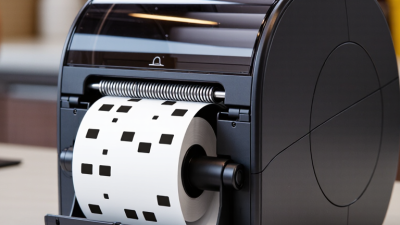
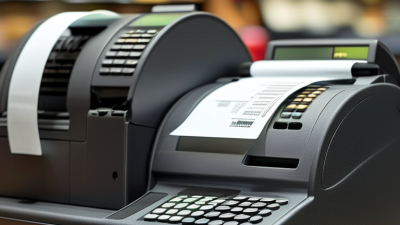
Thermal receipt paper supports a large share of China’s everyday printing needs, from supermarket checkouts to delivery counters. Its heat-sensitive coating reacts to a printer head, producing text without ink or a ribbon. The process is quick and quiet. A cashier can print a narrow receipt in seconds, even during a busy evening rush.
Paper quality affects more than appearance. Coating uniformity helps keep characters dark and readable, while a smooth surface can reduce wear on the print head. Buyers also need to check roll width, core diameter, paper thickness, and compatibility with their printers. In humid storage areas, poorly protected rolls may fade or discolor before use. These details matter.
China’s printing market serves retailers, restaurants, transport operators, and logistics businesses with different usage patterns. Suppliers therefore need consistent production, clear product specifications, and reliable batch checks. Sample testing is practical: print small text, cut several receipts, and inspect the rolls after storage. Still, one test cannot predict every printer or climate. It is easy to overlook that. Purchasing teams should compare actual performance, not just quoted prices, and ask how defects are recorded and addressed.
| Supplier Segment | Typical Products | Common Specifications | Role in China's Printing Market | Key Sourcing Checks |
|---|---|---|---|---|
| Thermal paper base-stock manufacturers | Uncoated or prepared thermal paper base stock supplied for further coating and converting. | Roll or sheet formats; basis weight and roll dimensions depend on the production line and customer requirements. | Provide upstream material for coating plants and converters serving receipt, label, and ticket applications. | Confirm coating suitability, base-paper consistency, moisture control, and roll-edge quality. |
| Thermal coating manufacturers | Direct thermal paper with a heat-sensitive coating; options may include top-coated grades for added surface protection. | Common receipt-paper basis weights are approximately 48–80 g/m², with many everyday grades in the 55–65 g/m² range. | Supply printable rolls for point-of-sale receipts, queue tickets, and other short-term printed records. | Request samples and check image density, print consistency, surface smoothness, and resistance to handling or environmental exposure. |
| Paper converting and roll slitting suppliers | Finished rolls slit and rewound from wider parent rolls to specified widths and lengths. | Common roll widths include 57 mm and 80 mm; diameter, length, core size, and winding direction should be specified separately. | Match paper rolls to the printer formats used by retail, hospitality, transport, and service businesses. | Verify finished-roll dimensions, core fit, winding direction, splice policy, packaging, and dimensional tolerances. |
| Custom-format and private-label converters | Custom-width receipt rolls, printed backings, and packaging prepared to buyer specifications. | Specifications are typically agreed by order, including paper grade, roll size, core, packing quantity, and any permitted back printing. | Support distributors and equipment suppliers that need application-specific formats or export-ready packaging. | Approve artwork and a production sample; clarify minimum order quantities, lead time, and inspection criteria. |
| Export-oriented paper suppliers | Thermal receipt rolls and related paper products packed for domestic distribution or export orders. | Product dimensions and carton configuration vary by destination market and printer requirements. | Connect Chinese manufacturing and converting capacity with overseas wholesalers, retailers, and printing-equipment channels. | Check applicable chemical and product requirements for the destination, shipping protection, carton labeling, and batch traceability. |
| Specialty thermal-paper suppliers | Selected grades designed for improved image stability, protective coatings, or specific ticket and label uses. | Performance depends on the formulation and intended use; confirm the grade against the printer and storage conditions. | Serve applications where receipts or tickets may need greater resistance to abrasion, heat, light, oils, or moisture. | Ask for test data relevant to the intended environment and conduct application-specific print and aging tests. |