Leave Your Message

How to Choose Thermal Paper Rolls for Global Sourcing?

Global sourcing of Thermal Paper Rolls is no longer a simple price comparison. Buyers must evaluate coating chemistry, core dimensions, winding quality, print density, shelf life, and delivery reliability. A roll that looks inexpensive may produce pale receipts, adhesive buildup, or frequent printer jams.

Grand View Research valued the global thermal paper market at approximately USD 4.3 billion in 2023. Its report projects continued growth through 2030, supported by retail, logistics, healthcare, and payment applications. Smithers also identifies transaction printing and industrial labeling as important demand areas. These figures show market momentum, but they do not guarantee supplier quality. Product specifications still require physical testing.

Printing-industry expert David Zwang has offered a useful principle: “The substrate is part of the system, not just a consumable.” That idea matters when selecting Thermal Paper Rolls for different climates and machines. Humidity can curl paper. Excessive heat can darken the coating. Long storage can reduce image stability. Buyers should request samples, test rolls in actual equipment, and confirm basis weight, roll length, core size, and coating performance. Chemical compliance also needs destination-specific review, including restrictions involving BPA, BPS, and other developers. No single certificate proves universal compliance.

A lower quotation may hide shorter rolls, weaker cores, or inconsistent rewinding. I would not treat supplier claims as settled evidence. Compare laboratory data with production experience, inspect packaging, and record failures after arrival. Reliable sourcing is less dramatic than chasing the cheapest offer, but it is usually more economical.
How to Choose Thermal Paper Rolls for Global Sourcing?

Define Use Cases: 57 mm and 80 mm POS Widths, 48–80 g/m²

Choosing thermal paper rolls starts with the use case, not the lowest quoted price. For compact POS terminals, 57 mm rolls suit narrow receipt paths and smaller counter spaces. An 80 mm roll provides more writing area, useful for itemized receipts, service details, and longer transaction records. Measure the printer’s actual path before ordering. Nominal width can vary slightly between suppliers.

Basis weight matters too. A 48–55 g/m² roll supports lighter, economical receipts. A 60–80 g/m² grade feels stronger and handles frequent customer contact better. However, heavier paper usually means fewer meters per roll. That trade-off can increase replacement work. The correct choice depends on receipt length, printer capacity, and storage conditions. ISO 536 defines grammage measurement, while ISO 534 provides a method for paper thickness testing. Ask suppliers for both values, not grammage alone.

Smithers’ The Future of Thermal Paper to 2028 identifies retail transaction printing as a continuing core application, while logistics and service printing add demand. The World Bank’s Global Findex 2021 also reports that 76% of adults held a financial account, supporting broad payment activity worldwide. These figures do not guarantee one roll specification will fit every market. Test samples in real stores. Check print darkness, curling, dust, and cutter performance. My practical mistake was treating 80 g/m² as automatically better. It was durable, but the shorter roll increased changeovers. Bulk sourcing still needs field validation.

Verify Printer Fit: ISO 536 Basis Weight, Core Size, and Roll Diameter

How to Choose Thermal Paper Rolls for Global Sourcing?

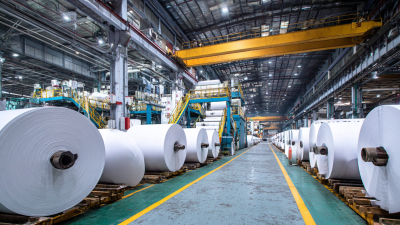
A thermal roll must fit the printer, not just the purchasing specification. Confirm the print width, maximum roll diameter, core size, and winding direction before placing a large order. ISO 536 basis weight shows paper mass in grams per square metre. It helps estimate thickness, stiffness, and roll length, but it does not replace dimensional testing. A heavier grade may reduce the printable length inside the same outer diameter.

Core size deserves careful measurement. A roll with a loose core can wobble during printing. A tight core may not load correctly. Measure the inner diameter, core width, and roll width with calibrated tools. Check the printer’s maximum outer diameter, too. Small differences can cause rubbing, sensor errors, or incomplete loading. I once focused on width and overlooked the core tolerance. The sample looked correct. The machine disagreed.

Tips: Request production samples with the stated ISO 536 basis weight. Test them in the actual printer for feeding, cutting, image darkness, and remaining-roll length. Record measurements from several rolls, not one. Paper humidity can change handling performance during overseas transport. A spreadsheet helps, but it cannot replace a physical trial. Ask suppliers to confirm tolerances in writing, then inspect the first shipment against those values. Some specifications still need revision after testing. That is normal.

How to Choose Thermal Paper Rolls for Global Sourcing? – Verify Printer Fit: ISO 536 Basis Weight, Core Size, and Roll Diameter

Dimensions are typical sourcing specifications. Confirm the actual printer's maximum roll diameter, usable paper width, core clearance, and sensor requirements before purchase.
Typical Application Nominal Paper Width Typical ISO 536 Grammage Basis-Weight Selection Common Core Inside Diameter Typical Maximum Roll Diameter Approximate Paper Length* Printer-Fit Verification Sourcing Recommendation
Small receipt and mobile point-of-sale printing 57–58 mm 48–65 g/m² 48–55 g/m² for compact rolls; 58–65 g/m² where better stiffness is required 12–13 mm 40–50 mm Approximately 10–18 m Measure the paper path width and confirm that the core holder accepts the selected inside diameter.
Standard retail receipt printing 79–80 mm 48–65 g/m² 55–65 g/m² offers a practical balance of stiffness, print quality, and roll capacity 12–13 mm or 17 mm 70–80 mm Approximately 50–80 m Verify the maximum outer diameter and the printer’s actual printable width, which may be slightly narrower than the nominal roll width.
High-volume checkout or hospitality receipt printing 79–80 mm 60–80 g/m² 60–70 g/m² for general use; 70–80 g/m² for a firmer receipt when permitted by the printer 17–25 mm 80–100 mm Approximately 65–115 m Check whether the printer can accommodate the heavier roll and larger outside diameter without feed resistance. Do not substitute a larger roll solely to increase length; the printer’s roll chamber and spindle clearance are decisive.
Card terminal and payment receipt printing 57–58 mm 48–65 g/m² 48–55 g/m² is common for compact devices; select 60–65 g/m² for improved handling if supported 12–13 mm 35–50 mm Approximately 8–18 m Confirm the roll width tolerance, core diameter, paper-end indicator position, and maximum roll diameter.
Portable label or ticket printing 50–58 mm, depending on the device 60–80 g/m² 60–70 g/m² for general tickets; higher grammage may improve rigidity but can increase feed load 12–25 mm 40–60 mm Approximately 12–30 m Check whether the printer requires a black mark, gap, notch, liner, or other media-sensing feature. A thermal receipt roll is not automatically suitable for label or ticket equipment; media construction must also match the sensor system.
Queue, kiosk, parking, or service ticket printing 79–80 mm 55–80 g/m² 55–65 g/m² for normal tickets; 70–80 g/m² where greater durability and stiffness are needed 17–25 mm 80–100 mm Approximately 65–115 m Verify continuous-feed compatibility, cutter clearance, roll direction, and the printer’s maximum supported roll weight.
Industrial or warehouse thermal printing 80–110 mm or equipment-specific 65–90 g/m² 65–75 g/m² for general documents; 80–90 g/m² only where the feed system is designed for it 25–40 mm 100–150 mm Approximately 100–250 m Confirm spindle diameter, roll weight limit, media thickness range, print-head pressure, and required environmental resistance. Use a complete technical sample approval because grammage, thickness, coating, and winding tension can all affect feeding.
Technical notes: ISO 536 is used to determine paper grammage, expressed in grams per square metre (g/m²). Grammage is not the same as paper thickness; two papers with the same grammage can have different caliper, stiffness, and roll length. Approximate paper length is calculated from nominal roll diameter, core diameter, and an assumed paper thickness, so actual length varies with caliper and winding tension. For international sourcing, specify nominal width, width tolerance, ISO 536 grammage, core inside diameter, core length, maximum roll diameter, winding direction, thermal coating requirements, and packaging conditions.

Check Chemical Compliance: EU REACH Limits BPA to 0.02% by Weight

When sourcing thermal paper rolls internationally, chemical compliance deserves more attention than whiteness, smoothness, or price. In the European Union, REACH restricts thermal paper containing BPA at 0.02% by weight or more. This limit applies to products placed on the EU market. It is not a suggestion.

Ask each supplier for a recent laboratory report. The report should identify BPA levels, testing methods, sample details, and production dates. Check whether the tested paper matches the actual roll, coating, and factory batch. A general compliance letter may sound professional, but it can hide important gaps. Keep batch numbers and supplier declarations together.

Do not stop at one document.

During practical sourcing, I would also request samples before approving a large order. Compare the sample’s surface, print quality, and coating odor with the tested material. Confirm that any BPA-free claim refers to measurable content, not just marketing language. BPS, BPF, and other developers may require separate review under changing rules. That part is easy to overlook.

A supplier can change its coating formula without changing the roll’s appearance. Recheck compliance after formulation changes, factory transfers, or long purchasing intervals. Independent testing costs money, but a failed shipment costs more. Still, one test cannot prove every future batch is compliant. That limitation should remain visible in the sourcing record.

Compare Thermal Performance: Typical Activation Near 60–70°C

How to Choose Thermal Paper Rolls for Global Sourcing?

When sourcing thermal paper globally, activation temperature deserves more attention than a bright test print. Most standard direct thermal coatings begin developing an image near 60–70°C. This range is typical, not universal. The exact response depends on coating chemistry, pressure, dwell time, and printhead energy. In practical roll trials, I compare samples at matched printer settings. A darker image is not automatically a better grade. Brightness can mislead. It may indicate excessive sensitivity.

Ask suppliers for activation data, image density curves, and storage recommendations. Then test rolls in cold warehouses, warm vehicles, and ordinary checkout conditions. A roll that activates at 60°C may print quickly, yet it can darken under prolonged heat. Receipts left beside a sunny window reveal this weakness fast. Check the reverse side, too. Coating transfer can contaminate rollers and create uneven lines. This is an easy detail to miss.

For global purchasing, document core size, roll length, basis weight, winding direction, and humidity limits. Keep retained samples from every production lot. I would also repeat testing after shipping; vibration and heat can change handling performance. Some specifications look precise but lack a test method, so comparisons become uncertain. That gap needs honest review. A supplier’s stable records, clear tolerances, and traceable inspection results offer stronger evidence than sales claims. Still, no laboratory result fully replaces a real printer trial. Test it properly.

How to Choose Thermal Paper Rolls for Global Sourcing?

Compare thermal performance by the typical activation temperature, with most standard thermal papers activating near 60–70°C.

The chart presents representative activation-temperature benchmarks for generic thermal paper grades. Lower activation temperatures generally indicate higher thermal sensitivity, while higher temperatures may provide greater resistance to accidental heat exposure. Actual performance can vary with coating formulation, printer energy, dwell time, and storage conditions.

Set Storage Controls: Below 25°C and 50% Relative Humidity

When choosing thermal paper rolls for global sourcing, storage conditions deserve the same attention as coating quality. Keep the warehouse below 25°C and near 50% relative humidity. These limits reduce premature image development, paper curling, and adhesive failure. ISO 18911:2010 identifies controlled temperature and humidity as essential for preserving imaging materials, with 30–50% relative humidity used as a practical range. Thermal paper is more sensitive than ordinary paper because heat can activate its recording layer.

Use calibrated data loggers at receiving areas, pallet centers, and warehouse corners. Record readings at least every hour. A short heat spike can matter, especially inside sealed containers exposed to tropical sunlight. Keep cartons away from walls, roofs, heaters, and concrete floors. Maintain air circulation around each pallet.

Original moisture-resistant packaging should remain sealed until production. After opening, reseal unused rolls quickly. Do not place chilled cartons directly into a warm converting room; condensation may form on the paper surface.

A 2023 industry analysis by Smithers reported continuing growth in direct thermal applications, increasing pressure on suppliers to protect roll consistency across longer supply chains. That growth does not remove basic storage risks. In my experience, teams often monitor average temperature but overlook humidity peaks. That is a weakness. Use FIFO rotation, inspect core deformation, and compare test prints after overseas delivery. One failed roll can reveal a control gap that dashboards hide.