How to Choose the Right Thermal Paper Rolls for Your Business?
Choosing the right thermal paper rolls is crucial for any business reliant on receipts and printing. According to a recent report by Smithers Pira, the global demand for thermal paper is expected to grow at a CAGR of 4.6% between 2022 and 2027. This growing market indicates how significant these rolls are to various industries, including retail and hospitality.
Thermal paper rolls come in various sizes and qualities. The right choice can enhance the efficiency of your printing devices. A poor quality roll might lead to smudged prints and wasted time, hampering operations and customer satisfaction. It’s important to consider factors like print clarity and durability. Recent studies show that 50% of businesses using high-quality thermal paper report fewer issues with their printing systems.
Understanding the importance of sourcing reliable suppliers is another key element. Many companies struggle with consistency in quality, leading to operational setbacks. Vetting your supplier can ensure you receive thermal paper rolls that meet industry standards. Remember, it's essential not to overlook the long-term cost implications of cheap alternatives. Investing in quality now can save you money and headaches down the line.

Understanding Different Types of Thermal Paper Rolls Available in the Market
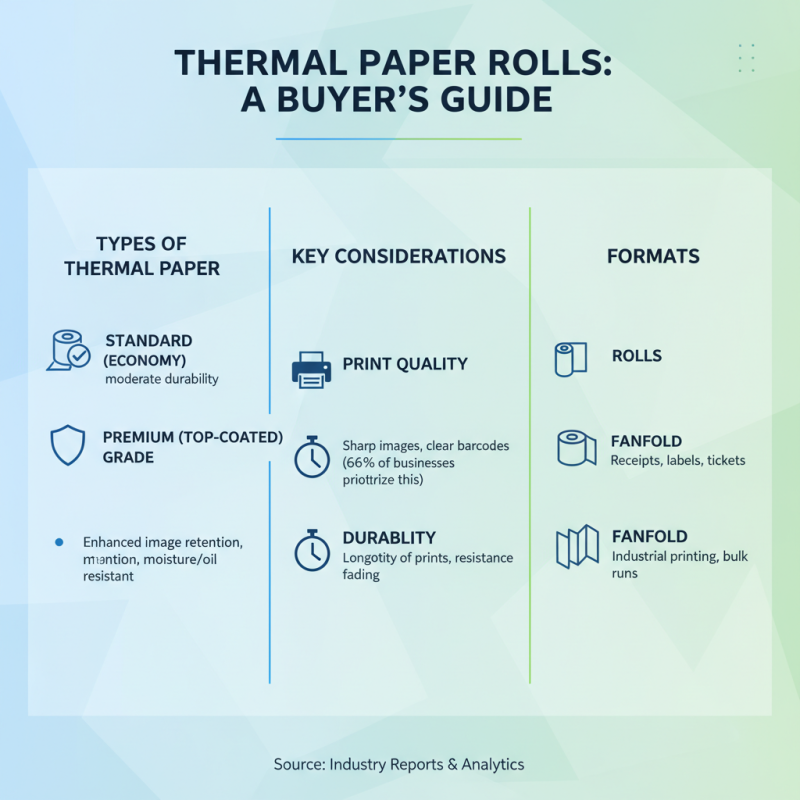
When selecting thermal paper rolls, understanding the different types is crucial. Thermal paper comes in various grades and formats, which can significantly impact print quality and durability. High-quality thermal paper ensures sharp print images and clear barcodes, essential for customer transactions. Industry reports indicate that approximately 66% of businesses prioritize print quality when choosing thermal paper.
Different applications require specific types of thermal paper. For instance, receipt printers typically use 48-55 GSM paper, which is lightweight but sufficient for short-term use. In contrast, long-lasting labels often require heavier GSM options. There's also eco-friendly thermal paper, made from recycled materials, catering to 30% of environmentally conscious businesses. However, not all eco-friendly options perform well in high-traffic environments.
Many businesses face challenges in sourcing the right thermal paper rolls. Inconsistent quality can lead to printing errors, resulting in customer dissatisfaction. It’s vital to balance cost and performance. Additionally, fluctuations in market availability can affect supply chains, making it necessary to consider multiple suppliers. The wrong choice can disrupt operations and harm your brand’s reputation.
Factors to Consider When Selecting Thermal Paper for Your Business Needs
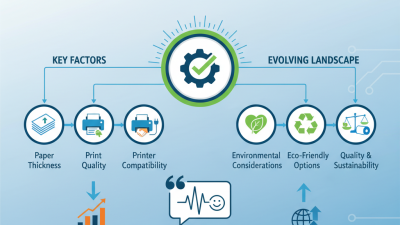
Choosing the right thermal paper rolls is essential for any business that relies on printing receipts or labels. When selecting thermal paper, consider several key factors. First, the paper's thickness can affect print quality and durability. Thicker paper often provides clearer prints and is less prone to tearing.
Another important factor is the size of the paper rolls. Ensure the rolls fit your printer specifications. Using the wrong size can lead to printing issues or wasted materials. Additionally, consider the coating type. Some thermal papers are designed for high-temperature environments, while others are better for everyday use.
Tips: Always test a small sample before making a bulk purchase. This can prevent future complications. Keep track of usage to determine the ideal quantity to order. Lastly, consult with your printer's manufacturer for recommendations. Understanding your specific needs will lead to smarter choices. Balancing price and quality is key. Make sure to prioritize reliability over cost savings to maintain your business efficiency.
How to Choose the Right Thermal Paper Rolls for Your Business?
Evaluating the Quality and Print Performance of Thermal Paper Rolls
When evaluating the quality of thermal paper rolls, focus on key aspects such as brightness, thickness, and coating. Brightness can impact print clarity. Look for rolls with a brightness level that suits your printing needs. Thickness is crucial too; thicker paper often yields better durability and reduces curling. A proper coating ensures longevity of the prints. Pay attention to these factors to improve your business operations.
**Tips:** Always request samples for testing. Check how the paper performs with your printers. Test prints in various conditions. If the prints fade or smear quickly, reconsider your choice.
Another critical factor is the printer compatibility. Not all thermal printers can handle every type of paper. Ensure the rolls you select fit your specific device. Misalignment can lead to print issues. Verify specifications beforehand. This can save time and money in the long run.
**Tips:** Maintain a record of your printer model and its requirements. Also, keep track of the roll performance over time. This helps in learning more about your particular needs in thermal paper rolls.
How to Choose the Right Thermal Paper Rolls for Your Business? - Evaluating the Quality and Print Performance of Thermal Paper Rolls
| Paper Type |
Width (mm) |
Length (meters) |
Base Weight (g/m²) |
Print Quality (1-10) |
Durability (1-10) |
Cost per Roll ($) |
| Standard Thermal Paper |
80 |
100 |
55 |
8 |
7 |
0.25 |
| High-Quality Thermal Paper |
80 |
120 |
60 |
9 |
8 |
0.30 |
| Water-Resistant Thermal Paper |
80 |
150 |
70 |
8 |
9 |
0.40 |
| Eco-friendly Thermal Paper |
80 |
100 |
52 |
7 |
6 |
0.28 |
| Heavy-Duty Thermal Paper |
80 |
200 |
75 |
10 |
10 |
0.50 |
Sizing and Dimensions: Choosing the Right Thermal Paper Roll Size
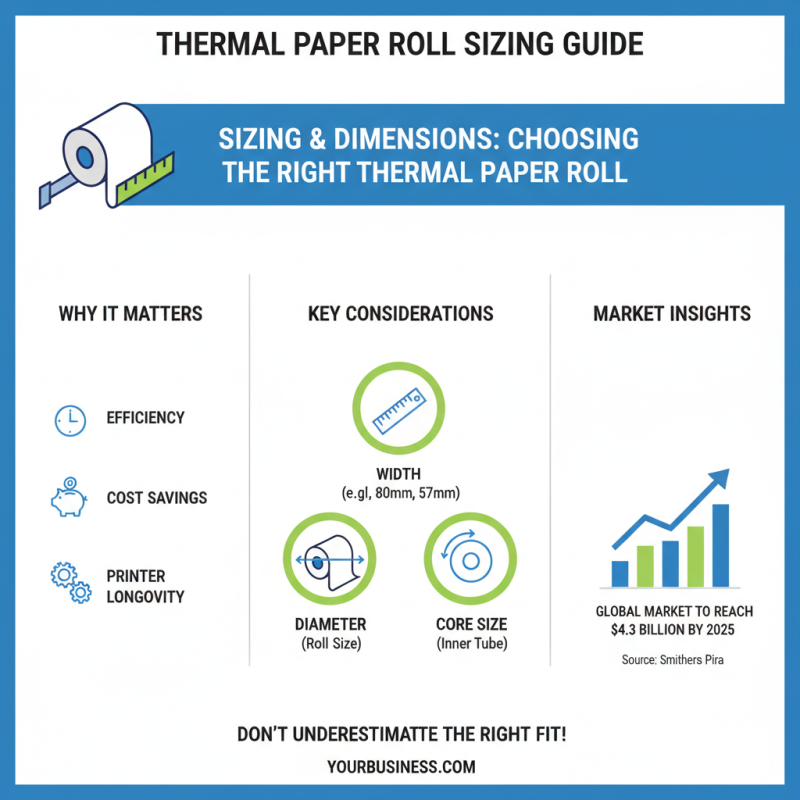
Choosing the right thermal paper roll size is crucial for any business that relies on printing. Thermal paper is available in various dimensions, and selecting the appropriate size can impact efficiency. Many businesses underestimate the importance of sizing. A study by Smithers Pira indicates that the global thermal paper market is expected to reach $4.3 billion by 2025. This growth underscores the need for tailored solutions.
When assessing sizes, consider the printer specifications first. Many thermal printers work best with 2.25-inch or 3-inch rolls. However, some may support larger ones. Accurate sizing prevents frustrating delays and inefficiencies caused by paper jams. Not choosing the correct width can lead to frequent replacements, wasted effort, and higher costs.
Moreover, thickness is as important as width. Typical thermal paper thickness ranges from 50 to 200 microns. Thicker paper can handle high-volume printing better but may not be suitable for all printers. Some users report that excessively thin paper can smudge easily. Attention to these details is essential. Not having the right size can lead to operational challenges and impact overall customer satisfaction.
Cost Considerations and Budgeting for Thermal Paper Purchases
When considering thermal paper purchases, understanding
cost dynamics is crucial for businesses. Industry reports indicate that thermal paper costs can vary
widely, often between $30 to $70 per case.
This price fluctuation largely depends on the quality and type of thermal paper selected. Many
businesses find themselves spending significantly more on low-quality paper, leading to
higher long-term costs due to printer jams and inefficiencies.
Budgeting for thermal paper should also account for
volume needs. According to a recent study, businesses that predict their thermal paper usage can save
up to 20% by buying in bulk. Many small
retailers underestimate their consumption, which leads to frequent reorders. This practice is less
efficient and more expensive over time. It is essential to forecast usage accurately to establish a
sustainable supply chain and budget effectively.
Additionally, examining the environmental impact can lead to hidden
costs. Sustainable options often come with a premium but may ultimately reduce waste disposal expenses
for businesses. Firms must weigh the slightly higher upfront costs against potential long-term savings
and their commitment to sustainability. Reflecting on these aspects can refine a business's purchasing
strategies and enhance overall financial health.