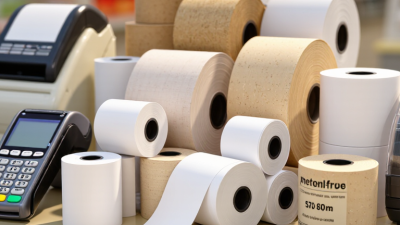
Choosing reliable thermal paper suppliers requires more than comparing prices on a spreadsheet. Global buyers need consistent print quality, stable supply, and clear product documentation. Thermal Papers may look similar in a sample box, yet their performance can differ under heat, humidity, and long storage.
This guide examines leading suppliers for international purchasing decisions. It considers coating uniformity, roll dimensions, core sizes, packaging strength, and production capacity. These details matter when receipt printers run continuously in supermarkets, pharmacies, transport counters, and warehouses. A dependable supplier should provide technical data, sample testing, quality-control records, and responsive communication. Certifications and chemical compliance documents should also be checked against the buyer’s destination-market requirements.
Real purchasing experience shows that the cheapest quotation is rarely the complete cost. Freight delays, damaged cartons, uneven coatings, or fading receipts can create expensive problems. No supplier is perfect. Buyers should still ask difficult questions about batch consistency, replacement policies, lead times, and emergency orders. Some evaluations remain uncertain until the first full container arrives. That limitation deserves honest attention.
The following overview compares supplier strengths, export experience, customization options, and service reliability. It is designed for distributors, retailers, and industrial buyers seeking practical evidence rather than promotional claims. Careful testing remains essential. A clear sample approval process can prevent avoidable disputes and support long-term partnerships.

Smithers’ global demand forecast places thermal paper on a steady growth path, rather than a sudden surge. Its market assessment projects the sector to rise from about US$4.45 billion in 2023 to US$5.19 billion by 2028, representing an estimated 3.1% CAGR. The figures reflect continued use in point-of-sale receipts, logistics labels, tickets, and compact medical records. Demand is practical. It is not purely digital replacement.
For global buyers, this forecast supports measured purchasing, not blind volume expansion. Suppliers should show coating specifications, roll dimensions, core sizes, and batch-level quality records. A receipt roll may look acceptable yet fade under heat, sunlight, or warehouse humidity. Test print density, image retention, curl, and dust before approving regular shipments. Small details matter.
Experienced buyers also compare regional lead times, packaging strength, and technical support. Ask for current safety documentation and clear statements about restricted chemical content. Forecasts remain estimates, and Smithers’ assumptions may change with payment habits, regulation, and digital adoption. That uncertainty deserves attention.
A supplier can meet today’s price while missing tomorrow’s performance needs. I would treat the 3.1% CAGR as a planning signal, not a guarantee.
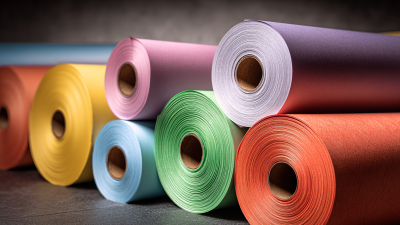
For global buyers, thermal paper selection starts with GSM, coating, and end-use conditions. Common grades range from 48 to 80 GSM. A 48–55 GSM roll feels light and supports longer lengths. An 70–80 GSM grade offers better stiffness for labels, tickets, and frequent handling. However, GSM alone does not prove quality. I have seen heavier paper curl when its coating balance was poor.
Smithers’ thermal paper market analysis identifies point-of-sale receipts, logistics labels, and tickets as major demand areas. These uses require different thermal sensitivity and surface strength. A standard coating can suit short-life receipts. Top-coated grades provide stronger resistance to moisture, oil, abrasion, and plasticizer migration. That difference becomes visible when printed receipts remain in wallets, vehicles, or warm warehouses.
Suppliers should provide basis-weight tolerances, caliper data, image density, and aging-test results. Buyers should also review storage guidance under the ISO 189 standards family. These standards address imaging-material storage, enclosure conditions, and image preservation practices. They do not replace application testing. Ask for samples, then test them with the intended printer, ribbonless mechanism, adhesive, and packaging. The Technical Association of the Pulp and Paper Industry reports that paper performance depends on fiber structure, coating uniformity, and converting quality. A supplier’s certificate may look convincing, yet real-world testing can expose blocking, fading, or uneven feeding. That step is sometimes skipped. It should not be.
Global buyers should evaluate thermal paper suppliers through compliance evidence, not attractive prices alone. Under EU REACH, thermal paper placed on the EU market must contain less than 0.02% BPA by weight. The restriction applies to paper supplied after January 2, 2020. A reliable supplier should provide recent laboratory reports, production-batch traceability, and a clear declaration of conformity. Check the test method, sample date, and laboratory accreditation. Old reports can hide current formulation changes.
FDA food-contact compliance requires a separate review. Thermal paper may be used near food packaging, but that does not automatically make it suitable for direct food contact. The intended use, transfer potential, and applicable FDA requirements must be assessed. Ask suppliers whether the paper complies with relevant food-contact provisions, including applicable indirect-additive rules and good manufacturing practices. Migration testing may also be necessary when contact is reasonably expected.
Small details matter. Store sample rolls beside the finished packaging, then inspect odor, coating transfer, and print stability. A supplier’s “BPA-free” claim is useful, but incomplete. It may not address other developers or regional requirements. I would request declarations for every shipment, although this adds time and cost. That caution is worthwhile. One weakness remains: no single certificate proves universal compliance. Buyers should review regulations, intended use, and current test data together.
EU REACH: Thermal paper must not contain bisphenol A (BPA) at or above 0.02% by weight, equivalent to 200 mg/kg or 200 ppm. FDA food-contact rules: The FDA does not set one universal BPA concentration limit specifically for thermal paper; compliance depends on the intended food-contact use, applicable 21 CFR requirements, and migration or safety evidence.
Global thermal paper sourcing now demands more than a low quoted price. Mordor Intelligence estimates the market at about US$4.8 billion in 2025, reaching approximately US$6.1 billion by 2030. That growth increases pressure on suppliers to prove capacity, consistency, and export readiness.
Capacity should be checked through monthly tonnage, coating-line availability, and backup production sites. Large suppliers may offer 20–45 day lead times for standard rolls, while custom widths or coatings often require 45–75 days. These figures are practical benchmarks, not guarantees. I would request recent production records and shipment references.
Minimum order quantities vary widely. Standard rolls may start near 5–10 tonnes, while private-label packaging can require 20 tonnes or more. Regional compliance also changes the evaluation. European buyers commonly request REACH and RoHS documentation, while FSC chain-of-custody evidence supports responsible fiber sourcing. BPA-free or BPS-reduced grades need laboratory verification, not only supplier declarations. The European Chemicals Agency continues monitoring bisphenols closely, so old test reports deserve caution. A comparison that ignores certificates can become expensive after arrival. That is the uncomfortable part. Supplier claims still require independent checking.
| Supplier Profile | Primary Region | Typical Product Range | Estimated Monthly Capacity | Standard Lead Time | Typical MOQ | Regional Certifications and Compliance | Export Readiness | Best-Fit Buyer |
|---|---|---|---|---|---|---|---|---|
| Supplier Profile A | East Asia |
48–80 gsm thermal jumbo rolls; POS rolls; ATM and kiosk rolls; direct thermal labels |
2,000–5,000 metric tonnes | 20–35 days after artwork and specification approval | 1–3 metric tonnes per size or 10,000–30,000 finished rolls | ISO 9001 REACH support RoHS support FSC available by product line | Strong container-loading capability; mixed-size programs commonly available | High-volume importers and private-label converters |
| Supplier Profile B | South Asia |
48–75 gsm POS paper; cash-register rolls; retail and logistics labels; coated thermal media |
800–2,000 metric tonnes | 25–45 days | 500–1,000 kg per specification or 5,000–15,000 finished rolls | ISO 9001 FSC available EU food-contact declaration where applicable REACH documentation | Suitable for full-container and recurring regional shipments | Distributors seeking competitive pricing and flexible pack formats |
| Supplier Profile C | Southeast Asia |
55–80 gsm thermal rolls; e-commerce shipping labels; warehouse labels; custom core and packaging options |
1,000–2,500 metric tonnes | 18–35 days | 300–800 kg per size or 5,000–20,000 rolls | ISO 9001 FSC chain-of-custody options REACH support Packaging compliance support | Good access to Asian shipping lanes; consolidation programs often possible | Online-commerce, logistics, and regional retail buyers |
| Supplier Profile D | Western Europe |
BPA-reduced and phenol-free thermal paper; premium POS rolls; medical and laboratory recording media; direct thermal labels |
500–1,500 metric tonnes | 15–30 days for stocked grades; 30–60 days for custom grades |
250–1,000 kg per grade or 3,000–10,000 rolls | ISO 9001 REACH RoHS where applicable FSC available EU packaging requirements | Strong documentation and traceability; efficient intra-European delivery | Buyers prioritizing regulatory documentation and premium quality |
| Supplier Profile E | North America |
48–80 gsm POS and ATM rolls; retail labels; industrial and healthcare thermal media; converted custom sizes |
600–1,800 metric tonnes | 10–25 days for standard items; 30–45 days for custom converting |
200–500 kg per SKU or 2,000–10,000 rolls | ISO 9001 FSC available REACH support for exports State chemical disclosure support | Fast domestic fulfillment; suitable for North American warehouse programs | Retail chains, service companies, and local distributors |
| Supplier Profile F | Latin America |
55–75 gsm thermal receipt rolls; lottery and payment rolls; ATM rolls; standard retail labels |
300–900 metric tonnes | 20–40 days for stocked products; 35–60 days for custom orders |
200–600 kg per size or 3,000–12,000 rolls | ISO 9001 FSC available by order REACH support Local packaging documentation | Best for regional supply; export capability varies by port and destination | Regional wholesalers and multi-country retail networks |
| Supplier Profile G | Middle East and North Africa |
48–80 gsm POS rolls; hospitality and payment rolls; ATM rolls; thermal label stock |
250–800 metric tonnes | 25–45 days | 300–1,000 kg per size or 5,000–20,000 rolls | ISO 9001 FSC available REACH documentation Gulf-market packaging support | Convenient for nearby markets; ocean and land freight options depend on destination | Hospitality, payment-service, and regional distribution buyers |
Choosing thermal paper suppliers requires more than comparing prices and catalog photos. A buyer should request production samples from several lots. Measure basis weight in grams per square meter after conditioning the paper. Use a calibrated scale and record moisture, temperature, and sample location. A few readings may hide variation. Take samples across the roll width and from multiple rolls.
Test image life with the intended printer, speed, and darkness settings. Store printed samples under heat, light, humidity, and normal office conditions. Compare readability at defined intervals, such as 30, 90, and 180 days. Record fading, gray background, and barcode scanning performance. Results can differ sharply from supplier claims. That is worth questioning.
Roll accuracy also matters during high-volume use. Check width, length, core diameter, winding tightness, edge damage, and telescoping. Measure actual roll length instead of trusting the label. Inspect splices and test feeding through the customer’s equipment. For FSC claims, request a valid certificate, certificate scope, chain-of-custody details, and matching sales documents. The claim should cover the purchased product, not merely the supplier’s general operations. I would keep all test records, even imperfect ones. Early methods may need revision after field feedback.