Leave Your Message
In 2026, global buyers will face more choices in Paper Receipt Rolls than simple size and price comparisons. Thermal rolls remain common in supermarkets, restaurants, pharmacies, transport counters, and mobile payment terminals. Yet bond, carbonless, recycled, and phenol-free options also deserve careful attention. Each type behaves differently under heat, humidity, pressure, and long-term storage.
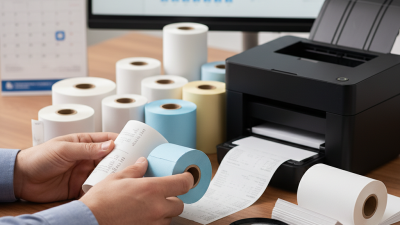
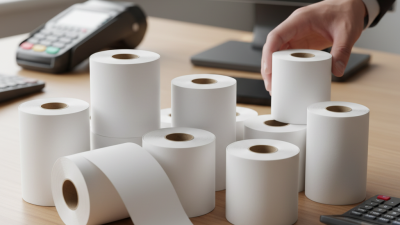
Size matters. A 57 × 40 mm roll may suit a compact handheld terminal, while an 80 × 80 mm roll can support busy retail counters. Buyers should confirm paper width, roll diameter, core size, printer compatibility, coating quality, and winding direction. A roll that fits the printer may still cause fading, dust, jamming, or poor barcode readability. That is easy to miss.
Koehler Paper CEO Kai H. Engel has emphasized, “Sustainability is more than a buzzword; it is a responsibility.” This principle gives the 2026 review a practical direction. It considers responsible sourcing, BPA- and BPS-free thermal coatings, recyclable packaging, and dependable print performance. Independent testing and supplier documentation remain essential. Marketing claims can sound polished. They may still lack technical evidence. Buyers should request material specifications, safety data, sample rolls, and storage recommendations before placing large orders. Climate conditions also matter. Rolls stored beside a hot window may fade faster than expected. No universal roll is perfect. The best choice depends on equipment, transaction volume, storage conditions, customer requirements, and local environmental standards. Mistakes are possible, even for experienced purchasers. A careful comparison reduces them.
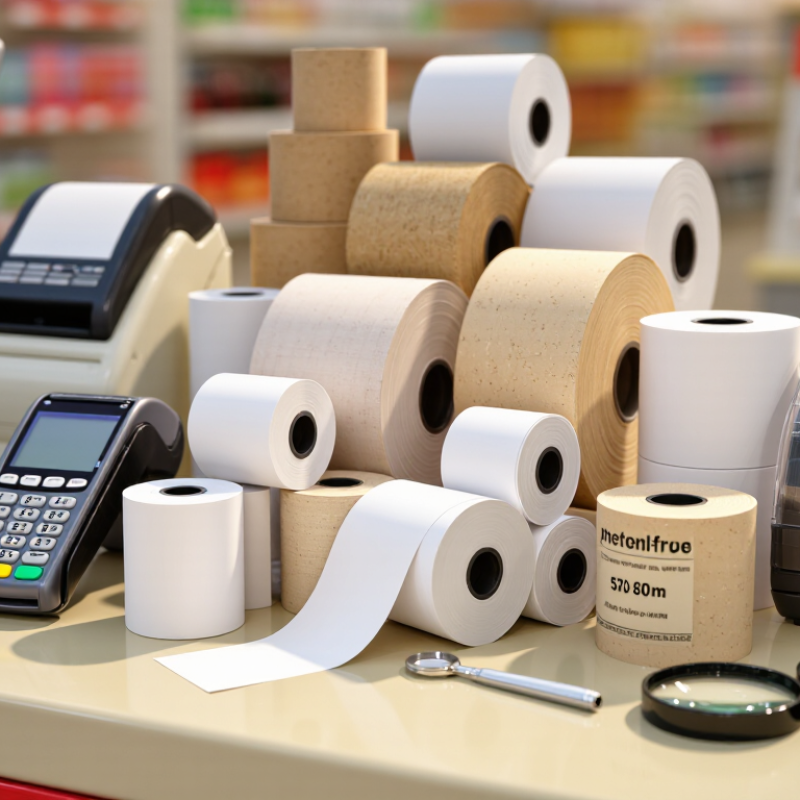
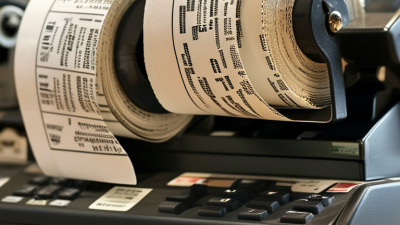
Paper receipt rolls are continuous paper webs wound around a cardboard or plastic core. They feed through receipt printers, cash registers, kiosks, and other compact devices. The common types include thermal rolls, bond paper rolls, and carbonless rolls for duplicate records.
A thermal roll has a base paper layer and a heat-sensitive coating. The printer head activates this coating, creating text without ink or ribbons. Bond rolls depend on ink or ribbon transfer. Carbonless rolls use coated layers that copy writing onto lower sheets. Roll structure also includes core diameter, paper width, winding direction, and roll length. Small differences matter. A roll can look suitable and still jam.
In practical purchasing checks, buyers should measure the old roll and printer path carefully. A 58 mm roll cannot replace an 80 mm roll without affecting the feed system. Check the paper surface, winding tightness, core fit, and print contrast. Storage also matters: heat, moisture, sunlight, and pressure may damage thermal coating. Retail counters need clear, fast printing. Parking machines need consistent feeding in dusty conditions. Weighing stations often require durable, readable records. Pharmacies and service desks may choose paper based on legibility and retention needs. “Universal” is not always universal. Local equipment specifications and applicable paper-safety requirements still deserve review.
| Receipt Roll Type | Definition | Typical Construction | Common Widths | Typical Length Range | Main Applications | Key Advantages | Important Buying Considerations |
|---|---|---|---|---|---|---|---|
| Thermal Paper Receipt Rolls | Heat-sensitive paper that produces an image when activated by a thermal printhead. | Base paper with a heat-sensitive coating; many grades also include a protective top coating. | 57 mm, 58 mm, 76 mm, 80 mm, and 82.5 mm | Approximately 10–80 m, depending on roll diameter and printer capacity | Retail point-of-sale terminals, supermarkets, restaurants, parking meters, kiosks, and payment terminals | No ink or ribbon is required; fast, quiet, and low-maintenance printing | Check image durability, coating quality, roll diameter, core size, and compliance with applicable chemical regulations. |
| Bond Paper Receipt Rolls | Uncoated paper used with impact printers that print through a ribbon or inked mechanism. | Cellulose-based paper, generally without a thermal coating; may be plain or preprinted. | 57 mm, 76 mm, and 80 mm | Approximately 10–60 m | Older cash registers, mobile service equipment, delivery documentation, and industrial transaction records | Readable without heat sensitivity; suitable for long-term filing when stored correctly | Confirm printer mechanism, ribbon compatibility, paper weight, winding direction, and required storage conditions. |
| Two-Ply Carbonless Rolls | Self-contained duplicate paper that creates a copy without carbon sheets or electronic printing. | Top sheet with a microcapsule coating and bottom sheet with a receiver coating; pressure transfers the image. | Approximately 57–80 mm | Approximately 10–40 m | Service counters, transaction records, delivery acknowledgements, and ticketing systems requiring a duplicate | Creates an immediate duplicate without ink, toner, or carbon paper | Specify sheet sequence, copy legibility, ply thickness, dust control, and compatibility with the printer or writing mechanism. |
| Three-Ply Carbonless Rolls | Multi-copy paper roll designed to produce an original and two duplicates in one operation. | Top, middle, and bottom carbonless sheets with matched coating systems. | Approximately 57–80 mm | Approximately 10–30 m | Logistics, weighing stations, dispatch records, service documentation, and controlled transaction forms | Produces multiple copies while keeping the process compact and ink-free | Check copy readability, ply order, total roll thickness, feed performance, and whether the equipment supports multi-ply stock. |
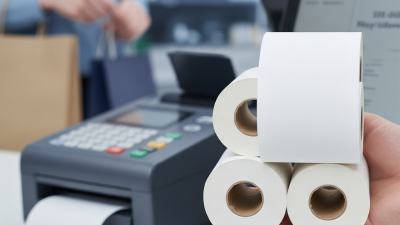
| POS Receipt Rolls | Paper rolls sized for point-of-sale printers used to issue sales receipts and transaction records. | Usually thermal paper, with a paper core and a smooth, even winding surface. | Commonly 57–80 mm | Approximately 18–80 m | Retail stores, restaurants, pharmacies, convenience stores, and hospitality counters | Designed for high-volume printing and quick replacement at checkout stations | Match the roll width, maximum outer diameter, core diameter, paper thickness, and printer sensor requirements. |
| ATM Receipt Rolls | Compact receipt rolls engineered for automated teller machines and other unattended banking terminals. | Usually durable thermal paper with controlled caliper and a clean, tightly wound core. | Commonly 80–82.5 mm | Approximately 50–150 m, subject to terminal design | ATM transaction receipts, self-service banking terminals, and financial service kiosks | Longer roll life reduces service visits and paper replacement frequency | Verify maximum roll diameter, core dimensions, paper thickness, edge quality, image life, and jam resistance. |
| Mobile Printer Rolls | Small-format rolls intended for battery-powered portable printers. | Lightweight thermal paper with a compact core and small outer diameter. | Typically 57–58 mm | Approximately 5–20 m | Mobile payments, field service, transportation, parking enforcement, delivery, and on-site invoicing | Compact and lightweight; suitable for portable equipment with limited roll space | Confirm exact width tolerance, roll diameter, core size, paper sensitivity, and resistance to handling conditions. |
| Kiosk and Ticket Rolls | Receipt or ticket paper supplied for self-service machines and automated issue points. | Thermal or bond paper, selected according to printer technology and required ticket life. | Commonly 58 mm, 80 mm, and 82.5 mm | Approximately 30–150 m | Transport ticketing, parking systems, cinema kiosks, amusement facilities, queue systems, and check-in machines | Supports unattended operation and can be customized for ticket length or printed information | Assess tear performance, print contrast, roll capacity, storage life, environmental exposure, and machine feed reliability. |
| Colored Receipt Rolls | Receipt paper manufactured in a colored base shade for visual differentiation or promotional use. | Thermal or bond paper with a colored paper base; print performance depends on the paper surface. | Commonly 57–80 mm | Approximately 10–50 m | Retail promotions, event tickets, queue tickets, internal coding, and document identification | Improves visual recognition and can support color-coded workflows | Test print contrast, barcode readability, color consistency, fading resistance, and compatibility with optical sensors. |
| Preprinted Receipt Rolls | Receipt rolls carrying fixed information before transaction details are printed. | Thermal or bond paper with preprinted logos, fields, terms, advertising, or regulatory information. | Commonly 57–80 mm | Approximately 10–80 m | Retail receipts, service invoices, vouchers, tickets, coupons, and branded document layouts | Reduces the amount of variable information that must be printed at the point of sale | Check artwork positioning, print registration, ink or coating compatibility, barcode placement, and minimum order requirements. |
| Recycled Paper Receipt Rolls | Receipt rolls containing recycled fiber, manufactured according to the performance needs of the printing system. | Recycled or partially recycled fiber base; may use thermal coating or remain uncoated for impact printing. | Commonly 57–80 mm | Approximately 10–80 m | Retail, hospitality, public services, internal records, and sustainability-focused purchasing programs | Can reduce reliance on virgin fiber when supported by suitable sourcing and production controls | Review recycled content, dust level, surface smoothness, print quality, responsible sourcing documentation, and end-of-life requirements. |
| Direct Thermal Label Rolls | Heat-sensitive rolls used to print adhesive labels rather than conventional loose receipts. | Facestock with a thermal coating, adhesive layer, and release liner or linerless construction. | Equipment-specific; commonly 25–110 mm | Determined by label size and roll diameter | Parcel handling, food service, inventory control, shelf labels, weighing, and short-term identification | Fast variable-data printing without ribbons; supports barcode and short-term labeling applications | Specify label dimensions, adhesive type, liner format, barcode contrast, temperature range, and expected label life. |