Top Tips for Choosing Heat Transfer Printer Paper?
Choosing the right Heat Transfer Printer Paper can greatly impact your printing projects. In the words of industry expert, John Miller, “Quality paper is the foundation of great prints.” Selecting the appropriate paper type can determine the longevity and vibrancy of your designs.
Heat Transfer Printer Paper varies in type, quality, and application. Some papers work better with dark fabrics, while others excel with light materials. This variation can create confusion, often leading to suboptimal results. It’s crucial to know your specific needs before making a choice.
Understanding different papers' characteristics is also essential. Some are compatible with inkjet printers while others only work with laser printers. Conducting thorough research can save time and cost in the long run. The right choice might not always be obvious, especially for beginners. Often, experimenting with different papers can lead to unexpected insights and improvements.
Understanding Different Types of Heat Transfer Printer Paper Available Today
When it comes to heat transfer printing, the type of printer paper you choose is crucial. There are several different kinds available, each designed for specific applications. For example, light transfer paper is ideal for printing on light-colored fabrics. It produces vibrant colors and is easy to use. Alternatively, dark transfer paper works well on darker fabrics and includes a white backing to enhance color visibility.
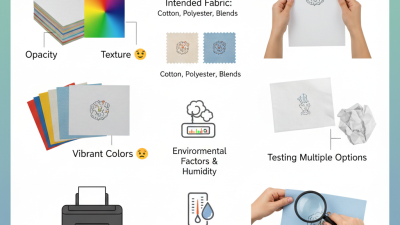
There are also specialized papers designed for specific materials. For instance, some papers are suitable for cotton, while others work better on polyester or blends. This distinction can impact the durability and feel of the print. Understanding these nuances is essential for achieving the desired outcome. Sometimes, a paper that looks good on the shelf may not perform well in real-life applications, leading to a frustrating experience.
Consider the texture of the paper as well. Some have a smooth finish, while others are more textured. The finish can influence the final appearance of your printed design. Testing a few options before committing to a large batch can help you gauge which type meets your expectations. Recognizing these elements can save time and resources in the long run.
Key Factors to Consider When Selecting Heat Transfer Paper for Your Needs
When choosing heat transfer printer paper, several key factors come into play. The type of fabric you will use is crucial. Cotton, polyester, and blends react differently to heat. Understanding the compatibility of the paper with these materials can make a significant difference in the output. Too often, users overlook this point, leading to poor results.
Also consider the finish of the paper. Some papers are designed for a glossy look, while others result in a more matte finish. This can affect the overall appearance of your print. Experimenting with different finishes may be necessary to find the one that suits your needs.
The weight and thickness of the paper are important too. Lightweight papers tend to work well for detailed designs, while heavier options are better for vibrant, large images. Many users fail to assess these specifications, resulting in disappointment. Always look for a balance between thickness and print quality to achieve the desired outcome.
Evaluating Print Quality: Importance of Paper Coating and Texture
When selecting heat transfer printer paper, the coating and texture significantly affect the final print quality. A well-coated paper can enhance color vibrancy and sharpness. According to industry studies, papers with a calendered surface often exhibit better ink adhesion. This directly influences how the design appears on various fabrics. Smooth textures minimize ink bleeding, leading to crisp images.
However, not every coated paper guarantees superior results. Some coatings can react poorly with specific inks. This incompatibility may lead to fading or uneven prints over time. Evaluating the texture is equally crucial. A textured surface can create a more tactile feel but might compromise print clarity. A balance must be struck between texture and coating.
In recent surveys, professionals noted that 70% of print quality issues stem from inappropriate paper choices. The experience of using different paper types reveals that testing is essential. Each fabric and application demands a unique combination of coating and texture. Understanding these factors is key to achieving optimal results.
Cost Analysis: Balancing Quality and Price in Heat Transfer Printing Paper
When selecting heat transfer printer paper, it's essential to consider both quality and cost. High-quality paper often delivers clearer prints and better durability. However, this doesn't always mean you need to choose the most expensive option. Prices can vary significantly, and it's vital to analyze your unique needs. A cheaper paper can be suitable for short runs or prototypes, but may lack the finality needed for customer products.
Start by examining the paper's specifications. Look for reviews or user experiences highlighting longevity and print quality. Some affordable options may perform surprisingly well, while others may let you down. Conducting small tests before committing to larger quantities is a practical approach. Balancing price with quality often requires some trial and error.
Reflect on your priorities. If cost is paramount, you might have to sacrifice some quality. On the other hand, investing in higher-quality paper can save you money in the long run through fewer reprints. Ultimately, your choice should align with your business goals and customer expectations. Make decisions based on informed insights rather than assumptions.
Cost Analysis: Balancing Quality and Price in Heat Transfer Printing Paper
Industry Standards and Best Practices for Heat Transfer Paper Selection
Choosing the right heat transfer printer paper is crucial for successful printing outcomes. Industry standards emphasize the importance of selecting paper suitable for your specific printer type. Different heat transfer methods, such as inkjet and laser, require papers tailored to their unique technologies. Compatibility is key. If the paper doesn’t match your printer, the results can be subpar, leading to dissatisfaction.
Various factors contribute to effective heat transfer paper selection. The weight and thickness of the paper can significantly influence how the transfer adheres to the substrate. Lighter paper may be easier to handle, but thicker options often provide more durability. Testing different weights can reveal surprising results, showcasing how slight variations impact the final product.
Color vibrancy is another critical factor. Transferring vivid colors may fall short with low-quality paper. Investing time in sampling different options can yield insights into how each type holds ink. Although it may be tempting to opt for the cheapest available paper, this decision can lead to regret. Reflecting on past choices can enhance future selections, ensuring consistently high-quality prints.
Top Tips for Choosing Heat Transfer Printer Paper
| Dimension |
Details |
| Material |
Polyester, Cotton, and Blends |
| Weight |
Lightweight (around 80gsm) to Heavyweight (220gsm) |
| Finish |
Matte, Glossy, and Satin |
| Compatibility |
Inkjet and Laser Printers |
| Transfer Temperature |
Temperature resistance from 160°C to 200°C |
| Color Options |
White, Clear, and Metallic |
| Durability |
Washable, Fade-resistant, and Scratch-resistant |
| Print Quality |
Vibrant Colors and High Definition |