Top Thermal Printer Rolls for Business Buyers
Choosing Thermal Printer Rolls is a small purchasing decision with a visible effect on daily operations. A cashier hears the cutter snap, prints a receipt, and expects crisp text without smudges or fading. When rolls disappoint, queues slow and staff spend time replacing paper instead of serving customers.
Quality-management expert W. Edwards Deming is widely associated with the principle, “Quality is everyone’s responsibility.” It applies here: buyers, suppliers, and printer operators all influence results. Still, the roll itself must match the printer. Check width, diameter, core size, paper grade, and coating before comparing prices. A roll that looks right on a shelf may not fit the machine. Tiny mismatch, real hassle.
This guide examines top Thermal Printer Rolls for business buyers, from checkout counters to shipping desks and kitchens. It considers print clarity, roll length, packaging, consistency, and value across routine workloads. A longer roll can reduce changeovers, but only if its diameter fits the printer compartment. Paper quality matters too, especially where receipts face friction, heat, or frequent handling. No single roll suits every business. That is easy to forget when a low price dominates the quote. Use the following comparisons to identify practical options, confirm specifications with suppliers, and test a small order before committing to bulk stock. One detail may still be overlooked: staff feedback after a full week can reveal issues a product sheet cannot.
How Thermal Printer Rolls Work in Business Settings
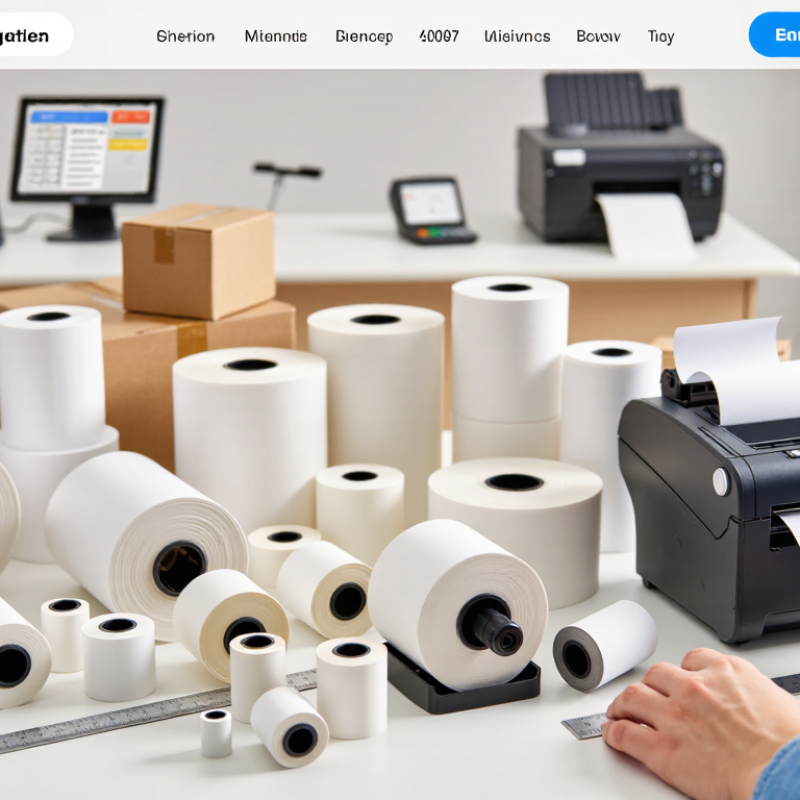
Thermal printer rolls work through heat, not ink. In a direct thermal printer, a heated printhead activates a coating on the paper. The dark marks appear where the printhead applies heat. That makes the process quick and simple, with no ink cartridge to replace. Useful at busy counters.
In business settings, the roll must match the printer’s width, diameter, and core size. A poor fit can cause jams or uneven feeding. Receipts may also fade faster when exposed to heat, sunlight, or friction. For stockrooms and service desks, suitable thermal rolls can keep transaction records and labels readable during routine handling. Paper choice is not magic, though; storage and printer condition matter too.
Tips: Check the printer manual for roll dimensions. Store rolls in a cool, dry place, away from direct sun. If printing looks pale, clean the printhead and check that the paper is loaded correctly. Then review the printer settings. It is easy to focus only on price, but a roll that feeds reliably may reduce interruptions during a crowded shift.
Top Thermal Printer Rolls for Business Buyers — How Thermal Printer Rolls Work in Business Settings
Common thermal media widths vary by use. Receipt printers often use 58 mm or 80 mm rolls, while 4-inch label printers use media about 101.6 mm wide. Check the printer specifications before buying.
Thermal printers use a heated printhead to create marks on heat-sensitive media, so these formats do not require ink or toner. The chart compares media width only; roll diameter, core size, and printer compatibility also matter.
Key Specifications for Choosing Business Printer Rolls
Top Thermal Printer Rolls for Business Buyers
Choosing thermal printer rolls starts with the printer’s exact requirements. Check roll width, maximum diameter, and core size against the manual or an empty roll. A roll that is slightly too wide may jam, while an oversized diameter can prevent the cover from closing. Fit matters. Confirm the paper is intended for direct thermal printing; thermal transfer devices use a different process. Also compare roll length, since longer rolls reduce changeovers but may not fit every printer.
Paper quality affects readable receipts and operating costs. Look for an even coating that produces clear text without excessive darkness or faded areas. For busy counters, test a sample during a normal shift: print small text, barcodes, and a full receipt, then check legibility after handling. Consider the environment, too. Heat, sunlight, and friction can darken or fade thermal images, so storage conditions matter. Some specifications can look impressive on paper but offer little value if the rolls do not perform consistently in your actual workflow.
Tips: Keep one used roll core for measuring, and record the width, diameter, and core size. Test a small quantity before placing a bulk order. Store rolls in a cool, dry place, away from direct sunlight. A simple check can prevent a frustrating mismatch.
Top Thermal Printer Rolls for Business Buyers – Key Specifications for Choosing Business Printer Rolls
| Roll Format (Width × Outside Diameter) |
Typical Core Diameter |
Approx. Paper Length |
Typical Paper Weight |
Common Printer Type |
Suitable Business Uses |
Buying Considerations |
| 80 × 80 mm |
12–18 mm |
About 70–80 m |
48–55 g/m² |
80 mm direct thermal receipt printer |
Supermarket checkouts, restaurants, retail counters |
Check the printer’s maximum roll diameter and core holder before ordering. |
| 80 × 70 mm |
12–18 mm |
About 55–65 m |
48–55 g/m² |
80 mm direct thermal receipt printer |
Point-of-sale receipts and service-counter transactions |
A smaller outside diameter may suit compact printer compartments. |
| 80 × 60 mm |
12–18 mm |
About 40–50 m |
48–55 g/m² |
80 mm direct thermal receipt printer |
Mobile counters, kiosks and moderate-volume checkout stations |
Confirm that the roll width matches the printer’s specified paper width. |
| 57 × 50 mm |
12 mm |
About 30–35 m |
48–55 g/m² |
57 mm direct thermal receipt printer |
Card terminals, handheld POS devices and compact counters |
Check both the roll width and maximum outside diameter; 57 mm rolls are not interchangeable with 80 mm rolls. |
| 57 × 40 mm |
12 mm |
About 22–27 m |
48–55 g/m² |
57 mm direct thermal receipt printer |
Payment terminals and portable transaction devices |
Useful where printer space is limited; compare roll length to expected transaction volume. |
| 57 × 30 mm |
12 mm |
About 15–20 m |
48–55 g/m² |
57 mm direct thermal receipt printer |
Compact mobile terminals and low-volume receipt printing |
Smaller rolls require more frequent replacement in busy locations. |
Selection note: These are representative roll configurations, not specifications for a particular product. Actual paper length varies with paper thickness, core size and winding. Verify printer-compatible width, maximum roll diameter, core diameter and paper type before purchasing. Direct thermal paper requires no ink ribbon.
Comparing Thermal Printer Rolls by Performance and Cost
Top Thermal Printer Rolls for Business Buyers
Comparing Thermal Printer Rolls by Performance and Cost
For business buyers, the lowest price per roll is not always the lowest operating cost. Compare roll length, paper thickness, core size, and printer compatibility before ordering. A roll that feeds smoothly can reduce jams and staff interruptions during busy checkout hours. Print quality also matters: receipts with pale text or smudged barcodes can create extra work. If your printer supports different paper grades, test a sample during a normal shift. Small details matter. The cheapest option may still be right for low-volume use, but not for constant printing.
Tips: Check the roll width and core diameter against your printer’s manual. Store rolls away from heat, sunlight, and damp areas. Ask suppliers for specifications, and compare cost per usable meter rather than price per pack. Test before scaling.
For frequent printing, a more durable thermal coating may produce clearer, longer-lasting text, though performance varies by printer settings and storage conditions. Estimate weekly usage, then compare the cost of reorders and wasted rolls. My rule of thumb is imperfect: prioritize consistent feeding for high-volume counters, and value for occasional use. Track jams and faded prints for a few weeks; your own results may challenge the initial price comparison.
Storage and Handling Practices for Reliable Printing
Thermal paper reacts to heat, light, moisture, and pressure, so storage conditions can affect print clarity before a roll reaches the printer. ISO 187:2022 specifies a conditioning atmosphere of 23°C and 50% relative humidity for paper testing. These are laboratory conditions, not a guarantee of storage life, but they offer a useful reference point.
Keep unopened rolls in their original wrapping, in a cool, dry room, away from windows, heaters, and vehicle dashboards. Small changes matter.
Do not stack heavy cartons on loose rolls. Pressure can mark the coating, while dust on exposed edges may cause uneven printing. Store cartons flat and dry, and let cold deliveries reach room temperature before opening; condensation can damage the paper surface.
Keep rolls away from oils, cleaning fluids, plasticizers, and direct contact with adhesive labels. That detail is easy to miss. Use older stock first, and record delivery dates so slow-moving inventory does not sit unnoticed.
Check a sample roll after storage: print a short receipt, inspect for fading or blank bands, and verify that the paper feeds smoothly. Even careful storage cannot reverse heat exposure, and I would not treat a date label as proof of print quality.