Leave Your Message
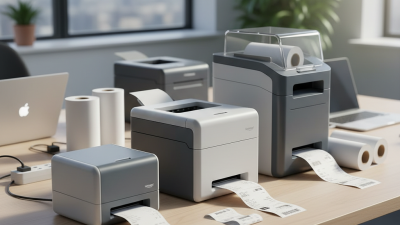
Global buyers need more than a low unit price when selecting a Thermal Roll Printer. They need dependable output, compatible media, and support that remains available after installation. A printer may look excellent in a product photo, yet struggle with curled paper, dusty counters, or long shifts. Real performance appears at the checkout desk, warehouse station, or ticketing window.
Jim Hamilton, an independent printing-industry analyst, offers a useful perspective: “A printer is only as valuable as the workflow it supports.” That idea deserves attention. Buyers should compare print width, resolution, speed, cutter life, connectivity, and daily duty cycle. Ethernet, USB, Bluetooth, and cloud-ready options can serve different operating environments. However, more features do not always mean better value. Sometimes, simpler is safer.
This guide examines leading Thermal Roll Printer suppliers for international purchasing teams. It considers product consistency, technical documentation, replacement parts, warranty terms, and regional service capacity. Samples should be tested with the exact roll size and paper type required. Small details matter. A weak cutter can delay hundreds of transactions. Poor adhesive labels can leave residue on equipment. Unclear specifications can create expensive surprises.
The market is broad, and no supplier fits every application. That is the uncomfortable part. Buyers must question attractive claims, request current certifications, and verify after-sales response times. Price still matters, but downtime often costs more. A careful comparison can turn a routine printer purchase into a reliable long-term workflow decision.
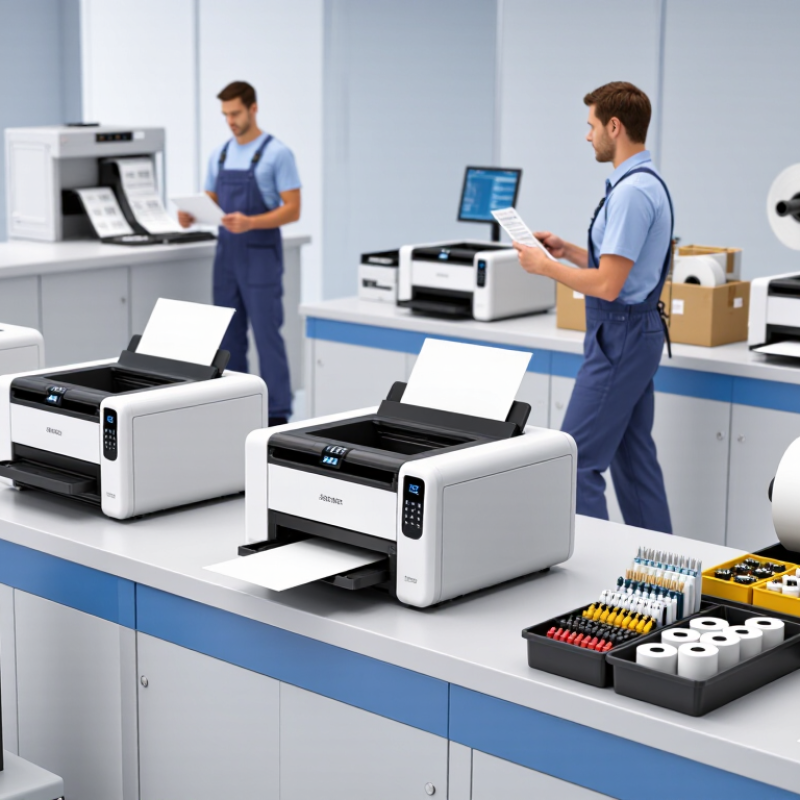
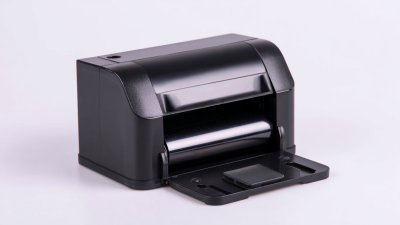
Thermal roll printers create images without ink cartridges. They feed a continuous paper roll across a heated printhead. In direct thermal printing, heat-sensitive coating darkens where the elements touch the paper. The result is a sharp receipt, label, ticket, or shipping record in seconds. No ink is needed.
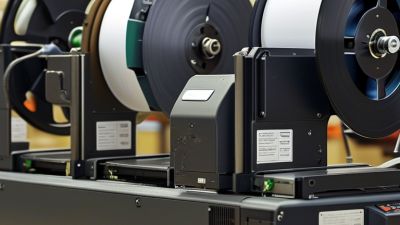
There are two main systems. Direct thermal models suit short-life documents, such as queue tickets and retail receipts. Heat, sunlight, and plastic contact can gradually fade the image. Thermal transfer models use a heated ribbon to move pigment onto paper, film, or synthetic stock. This creates more durable labels for warehouses, laboratories, and outdoor handling. The process sounds simple. Settings are not.
A 2024 Grand View Research report estimated the global thermal printing market at more than USD 4 billion in 2023, with continued growth expected through 2030. That expansion reflects demand for fast, traceable documents in logistics and commerce. Printer performance depends on more than speed. Roll width, core size, print density, cutter life, and media quality affect daily output. In practical testing, poor alignment can waste an entire roll. I have also seen users choose high resolution when standard resolution was enough. That raises cost without improving the barcode. The better question is not “How fast can it print?” but “What must the printed image survive?”
| Evaluation Dimension | Direct Thermal Roll Printer | Thermal Transfer Roll Printer | Why It Matters to Global Buyers |
|---|---|---|---|
| Printing Method | Uses a heated printhead to activate heat-sensitive coating on the media. | Uses a heated printhead to transfer ink from a ribbon onto the media. | The printing method determines media compatibility, durability, operating cost, and maintenance requirements. |
| Required Consumables | Thermal-sensitive rolls; no ink or ribbon is required. | Plain or coated label stock plus a compatible thermal transfer ribbon. | Direct thermal systems simplify procurement, while transfer systems provide more media choices. |
| Typical Print Resolution | Common resolutions include 203, 300, and 600 dots per inch (dpi). | Common resolutions include 203, 300, and 600 dpi. | Higher resolution is useful for small text, dense barcodes, symbols, and detailed graphics. |
| Typical Print Speed | Approximately 100–300 millimetres per second, depending on model and media. | Approximately 100–300 millimetres per second, depending on model, ribbon, and media. | Speed should be matched to daily print volume and the required label or receipt quality. |
| Common Print Widths | Compact receipt units often support rolls around 57–80 mm wide; industrial units may support wider media. | Desktop and industrial configurations commonly support media widths from approximately 50 mm to more than 100 mm. | Print width must match the buyer’s receipt, label, tag, or ticket specifications. |
| Image Durability | Print can fade or darken when exposed to heat, sunlight, friction, plasticizers, or certain chemicals. | Printed images are generally more resistant to heat, abrasion, moisture, and chemical exposure when the correct ribbon and media are selected. | Durability is critical for outdoor labels, long-term identification, logistics, healthcare, and manufacturing applications. |
| Typical Applications | Retail receipts, parking tickets, queue tickets, temporary shipping labels, weighing labels, and event tickets. | Product labels, inventory labels, shipping labels, asset tags, laboratory labels, and long-life identification labels. | Application suitability helps buyers select the correct printer technology instead of focusing only on purchase price. |
| Operating Cost Factors | Lower consumable complexity, but thermal media may cost more than standard paper or labels. | Costs include media, ribbon usage, printhead wear, and ribbon disposal. | Total cost of ownership should include consumables, maintenance, energy, downtime, and replacement parts. |
| Printhead Maintenance | Requires regular cleaning to remove dust, adhesive, and residue from the printhead. | Requires printhead cleaning and correct ribbon tension to reduce wear and print defects. | Routine maintenance improves print quality and can extend printhead service life. |
| Common Connectivity | USB, Ethernet, Wi-Fi, Bluetooth, and serial interfaces may be available depending on configuration. | USB, Ethernet, Wi-Fi, Bluetooth, and serial interfaces may be available depending on configuration. | Connectivity should be checked against warehouse systems, point-of-sale software, cloud platforms, and mobile devices. |
| Printer Control Languages | Many units support manufacturer-specific or emulated command languages for receipt and label formatting. | Many units support label-printer command languages and common barcode-printing workflows. | Command-language compatibility can reduce software integration time and support costs. |
| Barcode Compatibility | Suitable for common one-dimensional barcodes and selected two-dimensional barcodes when resolution and media are appropriate. | Suitable for one-dimensional and two-dimensional barcodes, including high-density formats when supported by the printer. | Buyers should verify barcode type, minimum module size, scanner distance, and required print resolution. |
| Recommended Duty Level | Suitable for light, medium, or high-volume work when the printer is matched to the workload and media. | Suitable for medium- to high-volume work, especially where durable labels are required. | Duty-cycle requirements should be confirmed using expected labels per day, print length, and peak workload. |
| Environmental Considerations | Media performance can be affected by temperature, humidity, ultraviolet exposure, and chemical contact. | Media and ribbon combinations can be selected for challenging temperature, moisture, abrasion, and chemical conditions. | Suppliers should provide media testing guidance for the buyer’s actual operating environment. |
| Key Supplier Information to Request | Supported roll width, core diameter, maximum roll diameter, media specifications, print speed, resolution, interface options, warranty, and spare printhead availability. | Supported ribbon types, ribbon length and winding direction, media specifications, print speed, resolution, interface options, warranty, and spare printhead availability. | A complete technical specification reduces compatibility risks during international purchasing and system installation. |
| Best Selection Approach | Choose when low-complexity printing, short- to medium-term image life, and fast media replacement are priorities. | Choose when long-lasting image quality, wider media choice, and resistance to environmental exposure are priorities. | Request samples printed on the intended media before placing a large order, especially for barcode and durability-sensitive applications. |