China Top 10 A4 Paper Manufacturers for Global Buyers
Choosing the right A4 Paper manufacturer can influence printing quality, delivery stability, and total purchasing cost. Global buyers need more than attractive catalog images. They must examine production capacity, fiber sourcing, sheet accuracy, packaging strength, certification, and export experience. A bright, smooth sheet may look identical at first glance, yet perform differently in high-speed office printers.
As Marco Mensink, Director General of Cepi, has stated, “Paper is a renewable, recyclable and versatile material.” This perspective matters when buyers compare manufacturers. Responsible sourcing, efficient production, and credible environmental documentation should support every supplier evaluation. However, sustainability claims require careful checking. A logo alone is not enough.
This guide introduces China’s top 10 A4 Paper manufacturers for global buyers. It considers factory capabilities, product consistency, quality controls, private-label services, and international logistics. Practical details matter. Think about pallet protection during humid sea transport, carton resistance in busy warehouses, and stable moisture levels after long delivery routes. These issues often decide whether paper loads arrive ready for sale or require costly inspection.
No ranking is flawless. Buyer requirements differ. Some companies need premium office paper, while others prioritize competitive pricing or customized packaging. The list therefore serves as a starting point, not a final verdict. Readers should request samples, verify certificates, review recent customer feedback, and confirm delivery terms before placing an order. Careful comparison takes time. It can prevent expensive surprises.
China’s A4 Paper Manufacturing Industry: Market Scope and Global Role
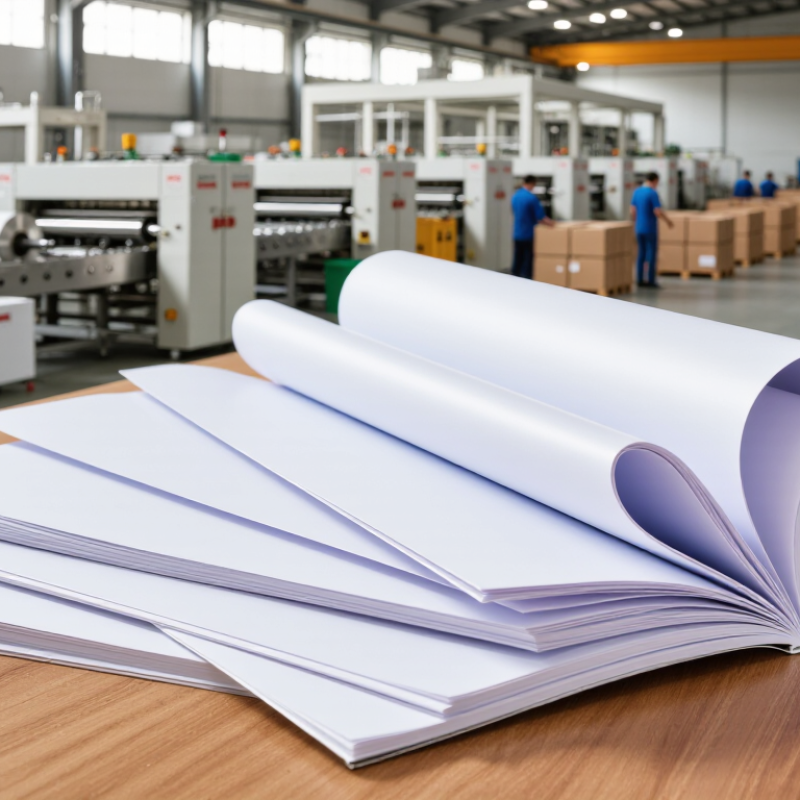
China’s A4 paper manufacturing industry has become an important part of the global office paper supply chain. Its scope covers raw material preparation, pulping, coating, cutting, packaging, and export logistics. Large production clusters support both high-volume orders and customized specifications. They serve distributors, wholesalers, schools, offices, and public institutions across many regions. Export routes connect Chinese factories with markets in Asia, Europe, Africa, and the Americas. That reach matters.
For global buyers, manufacturing capability means more than output. A reliable mill controls pulp blending, moisture, brightness, sheet dimensions, and ream weight. During supplier assessments, buyers should review production records, laboratory results, and batch consistency. Test reports should show measurable performance, including opacity, smoothness, and printer compatibility. Packaging details also deserve attention. Weak wrapping can damage paper during humid sea transport. Small errors matter.
The industry is adjusting to changing environmental expectations and tighter purchasing standards. Energy efficiency, recycled fiber use, and responsible forestry documentation now influence many sourcing decisions. However, recycled content can affect whiteness, stiffness, and feeding performance if poorly controlled. Supply chains also remain vulnerable to pulp prices, freight delays, and seasonal demand. Some factories communicate these risks clearly; others provide overly simple assurances. That weakness deserves scrutiny. A practical buyer compares samples from different production batches, not only one attractive shipment. China’s global role continues to expand, but dependable trade still requires evidence, testing, and honest communication.
How to Evaluate China’s Leading A4 Paper Manufacturers
China Top 10 A4 Paper Manufacturers for Global Buyers
How to Evaluate China’s Leading A4 Paper Manufacturers
A reliable evaluation begins with product consistency, not attractive quotations. Request samples from several production batches. Check sheet size, weight, brightness, opacity, and curl after printing. Samples reveal more.
A4 paper should feed smoothly through common office printers. Test a full ream, not only ten sheets. Measure moisture, dust, and edge cutting quality. Ask for evidence, including laboratory reports, factory inspection records, and recognized environmental certifications. Verify whether the documents match the actual production site.
Manufacturing experience also appears in packaging details. Inspect ream wrapping, carton strength, pallet protection, and container loading methods. Weak packaging can cause damp corners and crushed boxes during ocean transport. Discuss minimum order quantities, production capacity, lead times, and replacement procedures before signing an agreement. A capable manufacturer should explain these points clearly and provide traceable batch information.
Price deserves careful analysis. Extremely low offers may reflect lighter paper, unstable pulp quality, or incomplete packaging. However, a higher quote is not automatically safer. Compare landed cost, waste rates, payment terms, and delivery performance. An independent factory audit can reveal useful details, such as maintenance conditions and warehouse humidity. It may also expose weaknesses that polished documents hide. No evaluation is perfect. Recheck assumptions after the first shipment, especially when paper performance differs between seasons or destinations.
Top 10 Chinese A4 Paper Manufacturers for International Buyers
For international buyers, selecting from China’s top 10 A4 paper manufacturers requires more than comparing prices. Reliable suppliers provide clear specifications, production samples, and traceable quality records. Buyers should check sheet size, brightness, opacity, moisture control, and paper weight before ordering. An 80 GSM sheet may behave differently in humid ports or dry warehouses. Small differences matter.
Experienced purchasing teams request pre-shipment samples from the actual production lot. They inspect cutting accuracy, ream wrapping, carton strength, and printer performance. Ask for test reports showing standards, testing dates, and laboratory details. Confirm monthly capacity, lead times, minimum order quantities, and container loading plans in writing. A video factory tour helps, but independent inspection provides stronger evidence. Do not rely on polished photos alone.
International trade also requires practical communication. A capable manufacturer should explain Incoterms, export documents, payment stages, and claim procedures clearly. Check whether production records match the delivered cartons. They may not always match perfectly. Do not guess. Contracts should define tolerances, replacement terms, and inspection rights. A smaller trial shipment can reveal defects and delivery risks. One successful sample is useful, but consistency matters more.
China Top 10 A4 Paper Manufacturers for Global Buyers
Top 10 Chinese A4 Paper Manufacturers for International Buyers
Product Standards, Certifications, and Export Capabilities
China Top 10 A4 Paper Manufacturers for Global Buyers
For global buyers, product standards matter more than a polished catalogue. A4 paper should measure 210 × 297 mm under ISO 216. Common office grades use 70–80 g/m² grammage, but actual tolerance requires testing. Buyers should request basis-weight, moisture, brightness, opacity, and dimensional-stability reports for each shipment. Small variations can cause jams in high-speed copiers.
Certification checks should match the purchasing risk. ISO 9001 supports documented quality control, while ISO 14001 indicates an environmental management system. For long-term records, ISO 9706 testing can verify paper permanence. Responsible fibre sourcing may also require an independent chain-of-custody certificate. However, certificates alone are not enough. Confirm the certificate number, scope, expiry date, and issuing body. A copied PDF proves little.
Export capability needs measurable evidence. The FAO 2022 Forest Products Statistics report recorded global paper and paperboard production at roughly 420 million tonnes, showing the scale of this supply chain. UN Comtrade data for HS 4802 also places China among major paper-exporting economies. Ask manufacturers for recent shipment records, pallet photographs, container-loading procedures, and moisture-control methods. Strong suppliers can explain carton counts, port options, lead times, and claims handling clearly. Not every factory can. Some export claims still need independent verification.
This chart presents commonly traded A4 office-paper basis weights used by global buyers. A4 paper follows ISO 216 dimensions of 210 × 297 mm. Supplier evaluations commonly also review FSC or PEFC chain-of-custody evidence, ISO 9001 or ISO 14001 certification, product test reports, certificates of analysis, packing lists, and certificates of origin. The chart shows industry reference specifications rather than company or brand performance data.
Comparing Prices, Quality, MOQ, and Shipping Options
China’s top ten A4 paper manufacturers can differ sharply in price, quality, MOQ, and shipping terms. A lower quotation may reflect recycled content, lighter GSM, or basic packaging. Ask for the exact GSM, brightness, moisture level, and sheet count per ream. Request recent samples before placing a large order. A practical test includes printing, folding, and checking dust inside the package. Small details matter.
MOQ often depends on carton design, paper size, and private packaging requirements. Some suppliers accept trial orders, while others require full-container quantities. Compare the price per ream, carton, and metric ton. Otherwise, the cheapest offer may become expensive after inland transport and handling fees. Shipping choices usually include LCL, FCL, and express samples. Confirm loading ports, lead time, Incoterms, carton dimensions, and estimated freight charges in writing. Quality certificates help, but independent inspection is more reliable.
Tips: Build a simple comparison sheet for all ten suppliers. Record price, GSM, MOQ, production days, sample results, and shipping terms. Check whether the quotation includes export cartons and palletizing. Ask for production photos and a video inspection when possible. My own caution is simple: supplier rankings are useful, but they are never permanent. A factory may perform well one season and disappoint during peak demand. Leave room for rechecking.