What is Printing Paper and How to Choose the Right Type?
Choosing the right printing paper is crucial for any project. With various types available, understanding printing paper is essential. This guide aims to clarify the different options and their specific uses.
Printing paper comes in various weights, textures, and finishes. Each type affects the final output, influencing both appearance and feel. For instance, glossy paper enhances color vibrancy. Matte paper offers a more subdued look. Deciding which one to use can be daunting.
Consider your project’s purpose and audience. A high-quality brochure may require a different paper than an internal report. Reflection on these details contributes to professional results. Ultimately, selecting the right printing paper is both an art and a science. Navigating this choice can lead to improved printed materials.
Understanding the Basics of Printing Paper Types
Choosing the right type of printing paper is essential for any project. Different types of paper serve various purposes. For instance, glossy paper enhances colors, making it ideal for photographs. In contrast, matte paper provides a smooth finish, perfect for text-heavy documents. Each paper type has its characteristics that can significantly affect the final output.
When selecting printing paper, consider the finish, weight, and thickness. A heavier paper often conveys quality, while lighter options may be more cost-effective. You should also think about the ink compatibility. Not all papers work well with every printer. Some ink may bleed or smudge on certain surfaces. This aspect can change your planned results entirely.
Mistakes can happen. Sometimes, what looks good in theory may not translate into practice. It's crucial to test a few samples before finalizing your choice. Observing how different papers interact with your printer is valuable. This trial-and-error approach can help you avoid waste and ensure satisfaction. It's all about finding the best fit for your specific needs.
Types of Printing Paper and Their Usage
Factors to Consider When Choosing Printing Paper
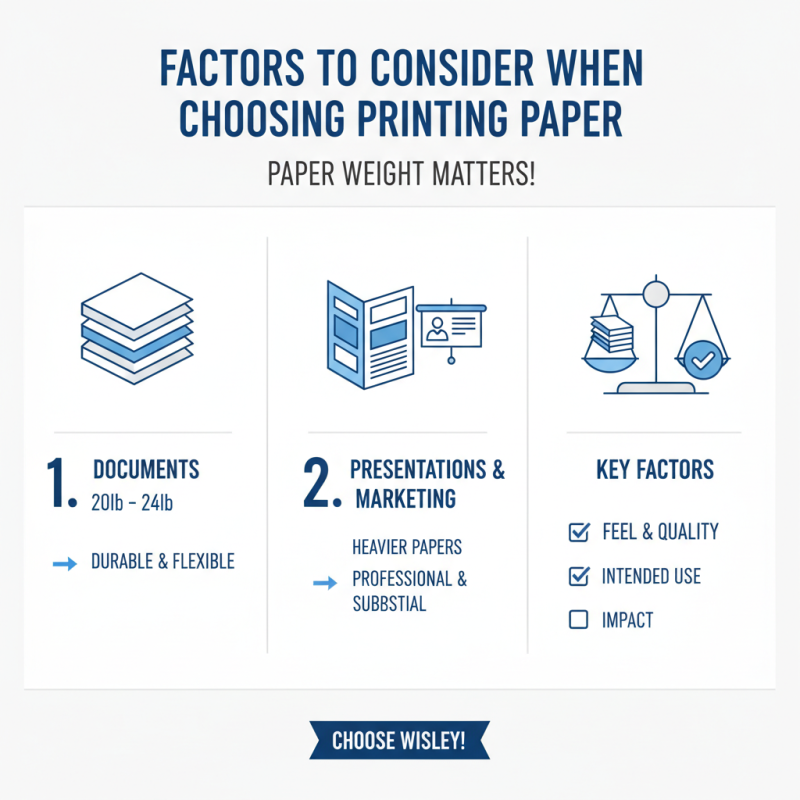
Choosing the right printing paper involves several important factors. One key consideration is the paper weight. It affects the feel and quality of the print. For documents, 20lb to 24lb paper works well. This weight offers durability without being too stiff. Heavier papers can be used for presentations and marketing materials. They add a professional touch that lighter weights can’t achieve.
Another crucial factor is the finish of the paper. Options include glossy, matte, and uncoated finishes. Glossy papers enhance color vibrancy, making them ideal for photos and brochures. Matte papers reduce glare, providing a more subdued look. This makes them suitable for text-heavy documents. Finally, consider the paper's brightness. Higher brightness levels result in sharper images and clearer text, enhancing the overall appearance of your print materials.
Remember that not all papers are created equal. You may find that a specific type doesn’t perform as expected in your printer. Experimentation can lead to a better understanding of your equipment. It’s always wise to request samples before committing to a large quantity. Making the right choice ensures your printed materials reflect your vision accurately.
Common Uses for Different Types of Printing Paper
When selecting printing paper, understanding the use case is crucial. Different tasks require different paper types. For instance, glossy paper is ideal for vibrant photos. It enhances colors and sharpness. Using it for marketing materials ensures they catch attention.
On the other hand, matte paper offers a more subdued finish that's perfect for brochures and reports. It provides a professional look and reduces glare, making it easier to read. If producing high-quality presentations, it may be wise to consider heavier weight paper. Thicker paper feels more substantial and often conveys importance.
Recycled paper is another option, promoting sustainability. However, it may not always have the same print quality as its virgin counterparts. Balancing quality with environmental impact can be challenging. When in doubt, testing a small batch can help identify the best choice. Each print job may require its own nuances, making it essential to assess needs carefully.
What is Printing Paper and How to Choose the Right Type? - Common Uses for Different Types of Printing Paper
| Paper Type |
Weight (GSM) |
Common Uses |
Finish |
| Bond Paper |
75 - 120 |
Reports, letters, and forms |
Smooth |
| Text Paper |
80 - 200 |
Books, magazines, and brochures |
Matte or glossy |
| Cardstock |
200 - 400 |
Postcards, business cards, and invitations |
Smooth or textured |
| Photo Paper |
210 - 300 |
Photographs and high-quality prints |
Glossy or satin |
| Newsprint |
40 - 60 |
Newspapers and flyers |
Rough |
Comparing Standard vs. Specialty Printing Papers
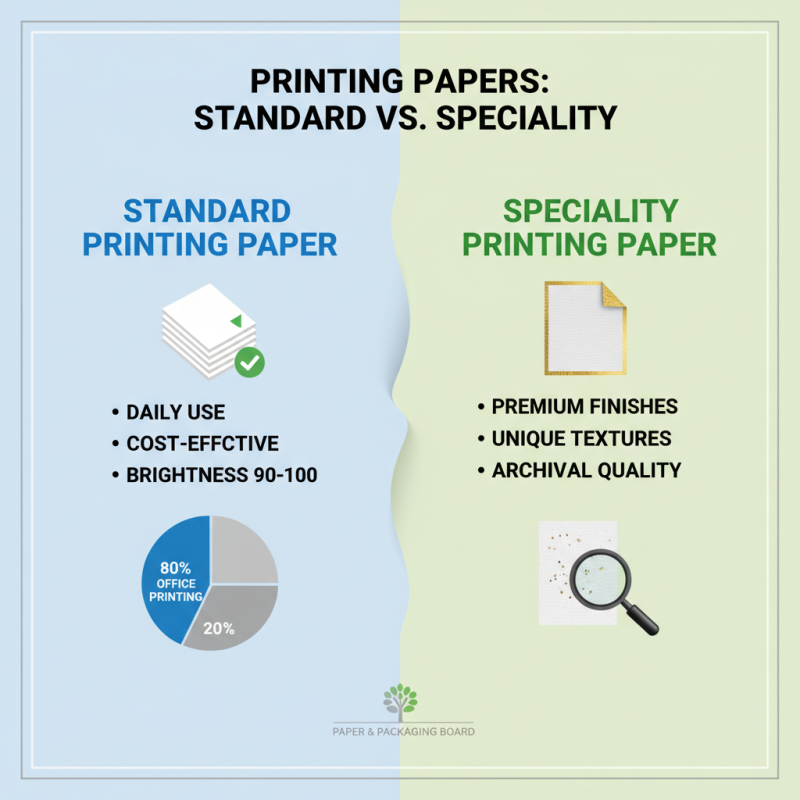
When considering printing paper, understanding the difference between standard and specialty options is crucial. Standard printing papers are often used in everyday printing tasks. They are generally designed for efficiency and cost-effectiveness. According to a study by the Paper and Packaging Board, 80% of printing in offices occurs on standard paper. This paper typically has a brightness level between 90-100, making it suitable for documents and flyers.
Specialty printing papers, however, cater to specific needs. They include types like heavy cardstock, glossy brochures, and textured papers. These papers offer unique finishes and weights, enhancing the visual appeal of printed materials. According to the National Paper Trade Association, specialty papers can improve consumer engagement by up to 75% in marketing campaigns. They do come with a higher cost, and choosing the right one can be a challenge. Reflecting on this decision, understanding the end use of the printed piece is essential.
Many users overlook the importance of weight and texture. For instance, heavier papers are often preferred for upscale invitations. Yet, they can lead to higher postage costs. Similarly, some users may not consider how paper gloss affects image presentation. Finding a balance between cost and quality can be difficult. Each choice carries its own advantages and disadvantages, requiring thoughtful consideration to achieve optimal results.
Tips for Selecting the Right Paper for Your Printing Project
Choosing the right paper for your printing project can greatly impact the final result. Different types of paper serve different needs. For instance, while glossy paper enhances colors, matte paper offers a more subdued look. Consider the purpose of your print. Is it for a brochure, a business card, or perhaps art prints? Each project has unique paper requirements.
Think about paper weight, too. Heavier paper feels more substantial and can improve durability. However, it may not be suitable for all printers. This is where knowledge and experience come into play. Testing a few paper types can lead to surprising preferences. You might find that papers you initially disregarded perform better.
Also, be aware of texture and finish. Smooth surfaces are excellent for sharp, detailed images. Textured papers can add an element of sophistication to any design. Experimenting with different combinations can yield impressive results. Don’t hesitate to seek expert advice if you're unsure. The right choice will enhance your project significantly.