Top Pos Rolls Buying Guide for Global Buyers in 2026?
In a rapidly evolving retail landscape, POS rolls play a crucial role in enhancing transaction efficiency. According to the Global POS Paper Market Report, the demand for high-quality POS rolls is projected to grow by 5% annually through 2026. These paper rolls are essential for various businesses, from retail to hospitality, where receipt accuracy is critical.
Moreover, advancements in printing technology and eco-friendly materials are transforming the POS rolls market. A significant share of consumers prioritize sustainability, pushing brands to innovate. Research by Smithers Pira indicates that about 40% of businesses are now focused on sourcing recycled or eco-friendly POS rolls. This shift reflects a growing awareness of environmental issues.
However, not all manufacturers meet the rising standards. The fluctuating quality of POS rolls can lead to printer jams and wasted materials. Consequently, buyers must remain vigilant. Understanding the right specifications and materials is vital for both cost-effectiveness and customer satisfaction. Ultimately, making informed choices about POS rolls can greatly influence operational success and sustainability efforts.
Understanding the Global POS Roll Market Landscape in 2026
The global POS roll market is poised for significant growth in 2026. Increasing adoption of electronic payment systems drives demand for various types of POS rolls. According to industry reports, this market is expected to reach $3 billion by 2026, reflecting a compound annual growth rate (CAGR) of approximately 5.1%. The rise in digital transactions creates a need for reliable, high-quality POS rolls.
Several factors influence market dynamics. Different regions show distinct preferences for material types like thermal and bond rolls. Thermal rolls dominate due to their cost-effectiveness and efficiency. Yet, there is an emerging interest in eco-friendly options. As consumers become more environmentally conscious, suppliers need to adapt. Reports indicate that around 30% of buyers prioritize sustainability in their purchasing decisions.
Challenges remain in the market. Supply chain disruptions can affect availability. Additionally, fluctuating raw material prices may impact production costs. Buyers should carefully evaluate suppliers, focusing on quality, service, and sustainability practices. This reflection is crucial for navigating the evolving landscape of the POS roll market. Reliable information is essential for making informed purchasing decisions.
Global POS Roll Market Overview - 2026
This bar chart presents the projected demand for various types of POS rolls in the global market for 2026. The data reflects trends in the retail and hospitality sectors, indicating growth areas and preferences among global buyers.
Key Features to Consider When Buying POS Rolls for Your Business
When selecting POS rolls for your business, several key features demand attention. The quality of the paper is crucial. Reports indicate that around 30% of businesses suffer from print quality issues. This affects customer transactions and satisfaction. High-quality thermal paper provides better print resolutions, ensuring legibility for receipts.
Another critical element is size compatibility. POS rolls come in various widths and diameters. A report by industry experts highlights that improper sizing leads to 22% of roll waste in retail environments. Ensuring the right dimensions can significantly reduce costs and enhance operational efficiency.
Durability also matters. Businesses experience a 15% increase in operational issues linked to low-quality rolls. Choosing rolls that resist fading and tearing ensures that receipts last longer. This is important for record-keeping and customer service. Remember that not all suppliers meet the same quality standards. Some may sacrifice quality for lower prices. This can lead to increased frustration and costs in the long run.
Comparative Analysis of Popular POS Roll Materials and Their Benefits
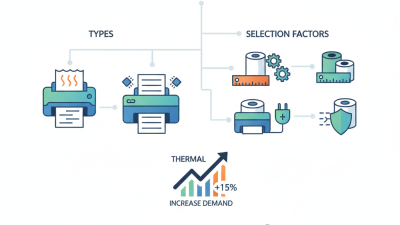
When considering point of sale (POS) rolls, material choice plays a significant role. Common options include thermal paper, bond paper, and carbonless paper. Each has unique properties, impacting durability and print quality. Thermal paper is popular for its quick print speed, but its sensitivity to heat can be a drawback. For those in retail, this means keeping the rolls away from direct sunlight.
Bond paper, less common, offers sturdiness. It's resistant to moisture and can be better for environments with varying temperatures. However, this may result in slower printing. Owners need to weigh speed against functionality when deciding. Carbonless paper is excellent for duplicate receipts, ensuring transactions are recorded without a carbon layer. Yet, its cost might be limiting for some businesses.
Often, buyers overlook the importance of sourcing materials responsibly. Quality varies widely. Some suppliers may prioritize cost over reliability. This could lead to potential issues like fading prints or paper jams. It’s crucial to engage with reputable suppliers who emphasize quality. Understanding these differences ensures you make informed decisions when selecting POS rolls tailored to your business needs.
Future Trends in POS Roll Technology and Adoption Rates by 2026
The landscape of POS roll technology is evolving rapidly. By 2026, it is projected that the global market for POS rolls will reach $1.2 billion. This growth reflects increasing demand from retail and hospitality sectors. The transition to digital solutions has not completely overshadowed traditional paper rolls. Instead, hybrid models are gaining traction.
Adoption rates are a critical aspect to examine. Data shows that about 70% of businesses currently utilize thermal rolls. However, only 30% are aware of eco-friendly alternatives. This could hinder progress in sustainable practices. Industry experts emphasize the importance of balancing cost and environmental impact.
Emerging technologies are set to influence POS roll manufacturing. Innovations like biodegradable materials are slowly entering the market. Yet, the perception of higher costs often deters businesses from making a switch. Moreover, companies must address quality concerns to ensure reliability. This tension between cost and sustainability is likely to shape industry developments leading into 2026.
Projected Market Growth: Statistics on POS Roll Demand by Region
As we look ahead to 2026, the demand for POS rolls is set to rise significantly. Various regions are projected to showcase a sharp increase in consumption. This surge stems from the growing adoption of point-of-sale systems in retail environments. Businesses are recognizing the need for efficient transaction processing and accurate record-keeping.
North America and Europe are leading this trend. The retail sector in these regions is expanding its use of technology. Companies are focusing on enhancing customer experience. This often translates into more frequent use of POS rolls. Meanwhile, emerging markets in Asia-Pacific present substantial opportunities as businesses enhance their operational capabilities.
However, this market growth brings challenges. Not all businesses are equipped to handle the rapid technological changes. There can be a gap in quality among suppliers. Buyers must critically evaluate reliability before making purchases. The demand for high-quality POS rolls will remain essential. As the market evolves, continuous adaptation will be crucial for all stakeholders involved.