How to Choose the Best Magazine Paper for Your Printing Needs?
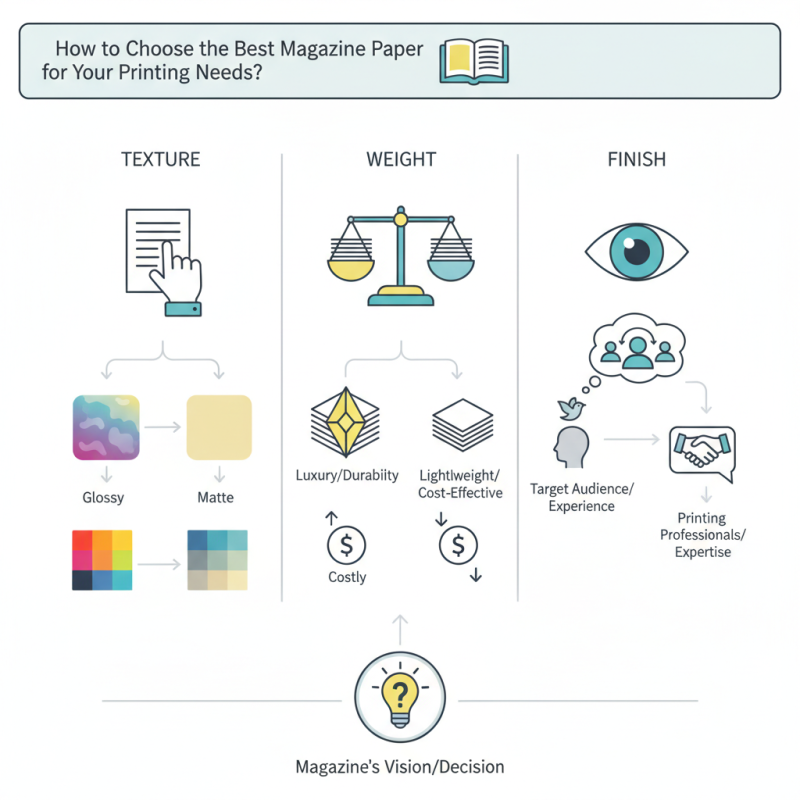
Choosing the right magazine paper is crucial for any printing project. The quality of paper can greatly influence the final appearance of your magazine. When selecting magazine paper, consider texture, weight, and finish. Each aspect affects the look and feel of your publication.
Magazine paper varies widely. Glossy finishes make colors pop, while matte options provide a softer touch. The weight of the paper can impact durability. Heavier papers often lend a sense of luxury. However, lighter papers can be more cost-effective for larger runs. It's important to balance aesthetics with budget.
When evaluating choices, reflect on your target audience. What kind of reading experience do they prefer? High-quality magazine paper can enhance engagement. However, the perfect choice is subjective and should align with your magazine’s vision. Consider seeking advice from printing professionals. Their expertise can guide you to the right decision.
Factors to Consider When Choosing Magazine Paper for Printing
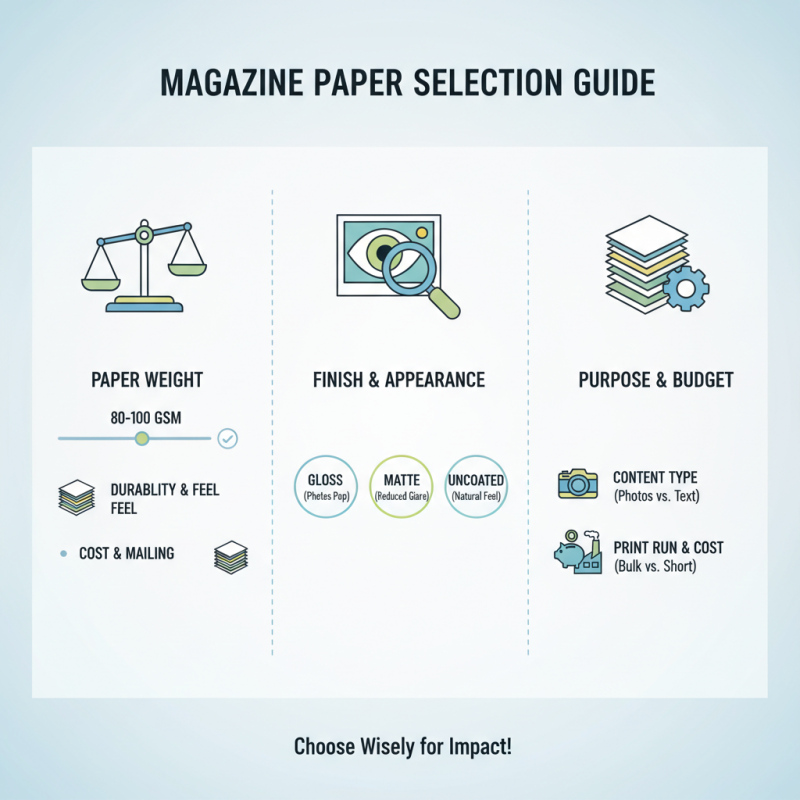
Choosing the right magazine paper is crucial for effective printing. Several factors can greatly influence your decision. The paper's weight affects durability and feel. For magazines, a weight of 80 to 100 gsm is typical. However, your specific design might require a different choice. Thicker paper can make photos pop, while thinner paper is cost-effective and lighter.
Texture is another important consideration. Glossy paper enhances color vibrancy, making it ideal for high-quality images. Matte paper, on the other hand, offers a softer finish with less glare, which is perfect for text-heavy publications. You may also want to think about the environmental impact. Recycled paper can be a sustainable choice, but it might alter the finish or color slightly. Keep in mind that not all paper types will yield the same printing results. Test samples before committing, as paper quality can vary widely.
Lastly, consider the printing method. Digital and offset printing have different requirements. Each method may react differently with types of paper. A wrong match can result in poor images or smudged ink. It’s essential to fully understand how each option aligns with your project. Prioritizing the right paper will elevate your magazine’s overall quality.
Types of Magazine Paper: Coated vs. Uncoated and Their Uses
When it comes to choosing magazine paper, understanding the differences between coated and uncoated options is crucial. Coated paper is treated with a layer of chemicals that provides a smooth finish. This type of paper is excellent for high-quality images and vibrant colors. According to a study by the Printing Industries of America, magazines printed on coated paper achieve 30% more visual impact compared to those using uncoated paper. However, coated paper may not be ideal for every project.
Uncoated paper offers a more textured surface, which can convey an organic or artisanal feel. It is often used for magazines focusing on lifestyle, arts, or niche interests. Research shows that uncoated paper absorbs ink differently, resulting in softer colors. One potential drawback is its susceptibility to smudging. This inconsistency can lead to variable results, making it essential to request print samples before finalizing your choice.
Choosing between these two types requires careful consideration. Factors such as the target audience, content type, and desired aesthetics all influence the decision. It is essential to test different options to see which aligns best with your vision. Balancing quality and cost-effectiveness may involve difficult trade-offs, yet this evaluation is vital for achieving successful results.
Understanding Paper Weight and Thickness: GSM in Magazine Printing
Understanding paper weight and thickness is crucial in magazine printing. GSM, or grams per square meter, is the standard measurement to assess paper quality. A higher GSM indicates thicker, sturdier paper. For instance, magazines often use paper ranging from 70 GSM to 150 GSM. Thinner papers are lighter but may lack durability.
Selecting the right GSM affects the magazine's feel and longevity. A 130 GSM paper provides a balance of quality and weight, ideal for vibrant colors and detailed images. According to industry reports, 80% of designers prefer using 100 to 150 GSM for better print results. However, a thicker paper can increase production costs.
Paper choice also influences reader engagement. Research shows that readers associate heavier paper with higher quality. Yet, in an era of sustainability, opting for environmentally friendly options with adequate GSM remains vital. This reflects a growing awareness in the industry. It prompts printers to explore recycled papers without sacrificing quality. Balancing these factors requires thoughtful consideration for effective magazine production.
How to Choose the Best Magazine Paper for Your Printing Needs? - Understanding Paper Weight and Thickness: GSM in Magazine Printing
| Paper Type |
GSM |
Thickness (mm) |
Common Use |
| Glossy Coated Paper |
150 GSM |
0.15 mm |
High-quality image reproduction |
| Matte Coated Paper |
200 GSM |
0.18 mm |
Elegant finishes for high-end magazines |
| Uncoated Paper |
80 GSM |
0.09 mm |
Eco-friendly and writable |
| Recycled Paper |
100 GSM |
0.11 mm |
Sustainable option for magazines |
| Silk Coated Paper |
130 GSM |
0.14 mm |
Smooth finish for sophisticated look |
The Role of Finish in Magazine Paper: Glossy, Matte, and Silk Options
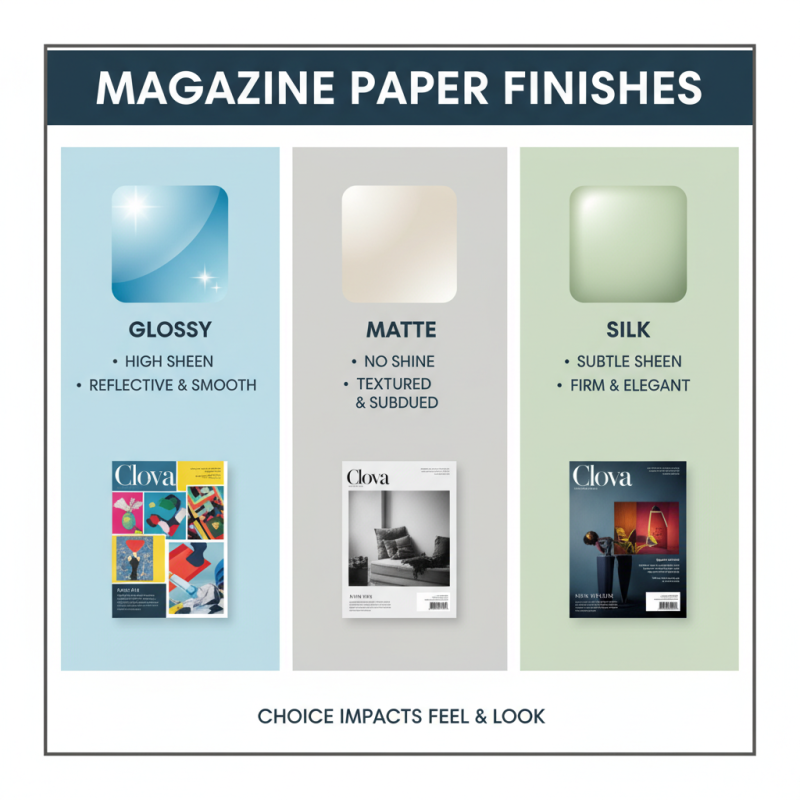
When selecting magazine paper, the finish can significantly impact the overall feel and look. Glossy paper offers vibrant colors and sharp images, making it popular for visually driven magazines. The reflective surface enhances photographs and graphics, attracting attention immediately. However, glossy finishes can sometimes cause glare, making text harder to read in certain lighting.
On the other hand, matte paper provides a softer appearance and a more muted color palette. It is less reflective and often has a tactile quality that feels appealing. This finish can make text easier to read and is great for detailed content. However, colors may appear less vibrant, which can be a drawback for heavily photo-centric material.
Silk paper lies in between glossy and matte finishes. It has a smooth surface that offers some reflection without overwhelming glare. This balance makes it versatile for various content types. Yet, silk may not provide the same depth of color as glossy options. Each finish has its strengths and weaknesses; understanding these differences can aid in making an informed choice about magazine paper.
Environmental Considerations: Recycled Paper and Sustainable Sourcing
Choosing the right magazine paper involves understanding its environmental impact. Recycled paper plays a crucial role in sustainable printing practices. A study by the Fiber Economics Technical Association highlights that using recycled paper can save up to 60% of the energy used in virgin paper production. This statistic indicates significant potential for reducing carbon footprints across the publishing industry.
Sustainable sourcing is equally vital. Many mills now prioritize sustainable forestry practices. The Forest Stewardship Council (FSC) certifies products that meet rigorous environmental and social standards. However, not all recycled papers meet these standards. Careful examination of supplier certifications is essential for ensuring genuine sustainability.
There's a growing demand for eco-friendly options. However, challenges remain. Sometimes, the quality of recycled paper does not match that of virgin options. This disparity can complicate decisions for printers who prioritize aesthetics. Balancing quality and sustainability requires thoughtful reflection and ongoing dialogue within the printing community.
Environmental Considerations in Magazine Paper Selection