China Best Offset Paper Quality Features and Applications?
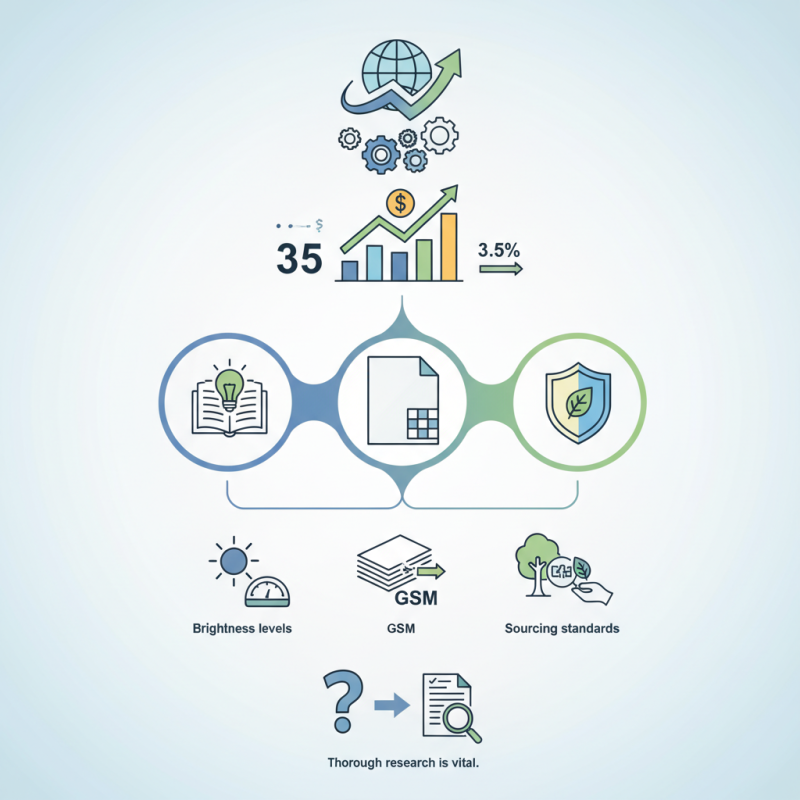
Offset Paper plays a crucial role in the global printing industry. In 2022, the global offset paper market was valued at approximately $35 billion. It's projected to grow at a CAGR of 3.5% by 2030, reflecting its importance. The quality of offset paper impacts print clarity, color vibrancy, and overall durability.
This paper type is known for its smooth surface and high-opacity features. These qualities make offset paper ideal for various applications, including textbooks, brochures, and marketing materials. However, not all offset papers are created equal. Variability in thickness, brightness, and recyclability poses challenges for buyers.
When selecting offset paper, understanding specific quality features is essential. Criteria such as brightness levels, GSM (grams per square meter), and sourcing standards can greatly affect final print results. A lack of attention to these details may lead to disappointing outcomes in print production. Therefore, thorough research is vital for industry professionals looking for the best options in offset paper.
Features of High-Quality Offset Paper in China
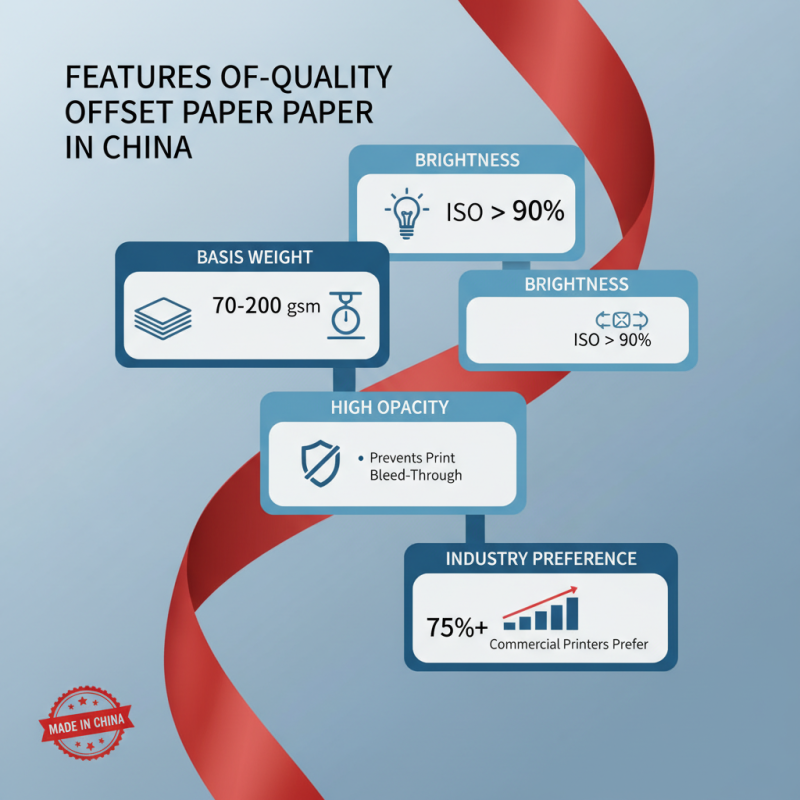
High-quality offset paper from China is notable for several distinctive features. The basis weight typically ranges from 70 to 200 gsm, depending on the application. Many manufacturers emphasize brightness levels exceeding 90 on the ISO scale, enhancing print clarity. High opacity is another critical aspect. This feature prevents print bleed-through, ensuring vibrant colors and sharp text. A recent industry report highlighted that over 75% of commercial printers prefer high-opacity paper for its superior print results.
Durability is also essential. Offset paper must withstand various printing techniques. Resistance to tearing and folding is a key requirement, particularly for packaging applications. Coated offset paper often provides improved ink absorption, resulting in sharper details. Industry surveys indicate that 65% of users report higher satisfaction with papers designed for offset printing. However, sourcing sustainable materials remains a challenge for manufacturers. Many companies are exploring eco-friendly options, but consistent quality can vary.
Another important characteristic is the paper's finish. A smooth surface allows for high-quality image reproduction, critical in photography and marketing materials. While various textures exist, each serves a specific purpose in delivering the desired aesthetic. The increasing demand for digital publications is reshaping the offset paper market, creating a need for more versatile products that can adapt to changing consumer trends.
Common Applications of Offset Paper in Various Industries
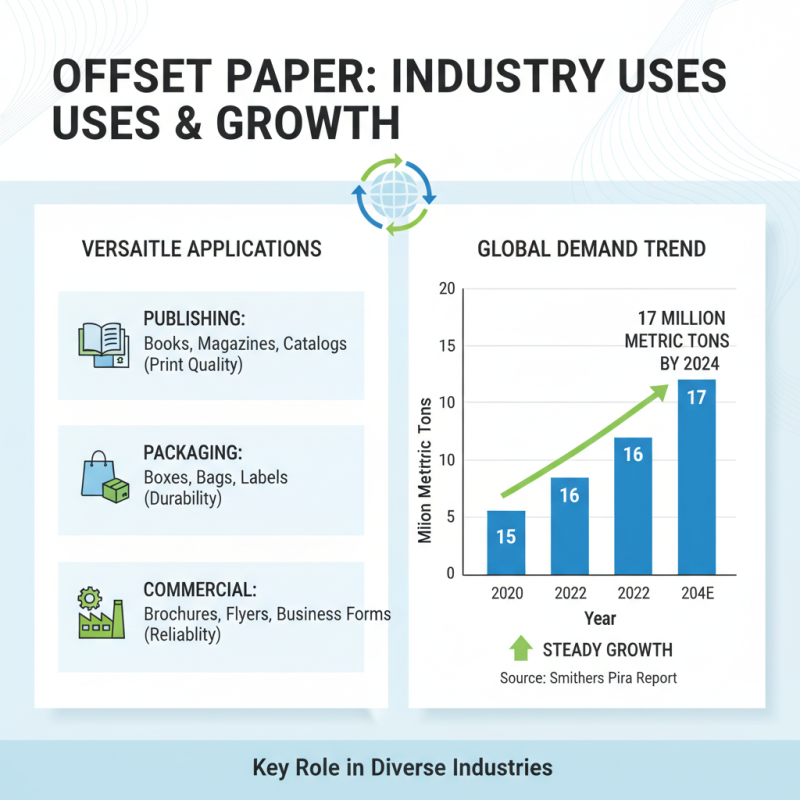
Offset paper plays a vital role in many industries, showcasing its versatility and quality features. In the publishing sector, offset paper is often used for magazines and books due to its excellent print quality. According to a report from Smithers Pira, the global demand for offset paper is projected to reach 17 million metric tons by 2024. This indicates a steady growth trend, highlighting its continued relevance.
In the commercial sector, offset paper's durability makes it ideal for printing brochures, flyers, and promotional materials. These applications leverage the paper's ability to produce vibrant colors and sharp images. The North American commercial printing industry alone was valued at $85 billion in 2020, with offset printing accounting for a significant portion of that market. High-quality offset papers help businesses engage their customers effectively.
Moreover, the packaging industry also employs offset paper for cartons and labels due to its strength and printability. It’s essential for food packaging, which requires compliance with safety standards. A study by MarketsandMarkets estimates the packaging paper market, including offset paper, will grow to $500 billion by 2025. However, challenges related to environmental sustainability and sourcing remain. The industry must continue to evolve towards eco-friendly practices while maintaining quality standards.
Comparative Analysis of Offset Paper Grades in China
China's offset paper market features a variety of grades, each tailored for specific printing needs. The grading system typically includes categories like newsprint, coated paper, and uncoated paper. Each type has distinct characteristics, influencing print quality and cost. For example, higher grades generally offer better brightness and smoothness, which are crucial for high-resolution images. However, not every business requires top-tier quality. Often, medium-quality grades suffice for everyday printing tasks, ensuring cost-effectiveness.
When evaluating offset paper grades, understanding their applications is vital. Coated papers are excellent for vibrant color printing, making them ideal for brochures and magazines. Uncoated papers, on the other hand, are preferred for text-heavy prints like books and letterheads. Each grade presents its own advantages and weaknesses, creating a complex landscape for buyers. Some companies mistakenly choose low-grade paper for high-quality projects, leading to disappointing results. It's essential to balance quality and cost while considering the paper's intended use.
Moreover, variations in manufacturing quality can affect paper performance. Not all mills ensure the same standards, which can lead to inconsistencies. This aspect requires careful evaluation when sourcing paper. A proper understanding of these factors enhances decision-making. It allows businesses to select the right grade that meets their specific needs and aligns with their budget constraints.
Sustainability Practices in Offset Paper Production
Sustainability practices in offset paper production are crucial in today's eco-conscious world. The industry is moving towards more sustainable methods to reduce environmental impact. According to a report from the Paper Task Force, only 30% of paper in the world is recycled. This highlights a significant area for improvement.
Many manufacturers are now adopting eco-friendly materials. They are utilizing recycled fibers to produce offset paper. This process lowers energy consumption and reduces waste. The use of renewable energy sources has also been increasing. Reports indicate that about 25% of the paper production industry is now powered by renewable energy.
However, the shift to sustainable practices is not without its challenges. Some manufacturers still rely heavily on virgin fibers. This dependency raises concerns about deforestation and habitat destruction. Additionally, there is a lack of awareness among consumers regarding sustainable options. Industry leaders must focus on education and transparency to bridge this gap. Ultimately, the goal is to create a balance between quality production and environmental stewardship.
Future Trends in China's Offset Paper Market
The future trends in China's offset paper market indicate a robust growth trajectory. According to recent reports, the offset paper industry in China is expected to reach a market size of approximately $40 billion by 2025. This growth hinges on increasing demand from packaging and publication sectors. The rise of e-commerce amplifies this demand, urging companies to invest in high-quality offset paper.
Sustainability is becoming a critical factor. Reports suggest that around 70% of consumers prefer environmentally friendly products. Manufacturers are responding by adopting recycled materials and eco-friendly production methods. Despite these advancements, there are lingering concerns. Many companies still struggle to balance cost-efficiency with environmental responsibility.
Technological innovations also play a pivotal role in shaping the market. Automation and digital printing technologies are enhancing production efficiency. However, the rapid pace of change poses challenges. Some firms may lag in adopting new technologies, risking a loss of competitiveness. The market demands a proactive approach, where adaptability is essential for survival.