10 Tips for Choosing A3 Wood Pulp Paper for Your Needs?
Selecting the right A3 Wood Pulp Paper can be daunting. According to Dr. Emily Chang, a leading expert in paper manufacturing, "The quality of paper significantly influences your project's final outcome." This highlights the importance of making informed choices.
A3 Wood Pulp Paper is versatile and widely used across different industries. It’s essential to consider factors such as thickness, texture, and brightness. For instance, a heavier paper often conveys a more professional image. Sometimes, however, consumers focus solely on price, neglecting quality. This can lead to disappointing results in printing or crafting.
Understanding your specific needs is key. Do you require rigidity for a presentation? Or perhaps a lighter paper for bulk printing? Reflecting on these questions can guide your decision. The right choice not only enhances your work but also reflects your commitment to quality.
Understanding A3 Wood Pulp Paper: Key Characteristics to Consider
When selecting A3 wood pulp paper, it's crucial to understand its key characteristics. The brightness level of the paper impacts the final print quality. Typically, a brightness of 80-100 is preferred for vivid colors. A study by the Paper Manufacturers Association suggested that higher brightness can enhance the readability of printed texts.
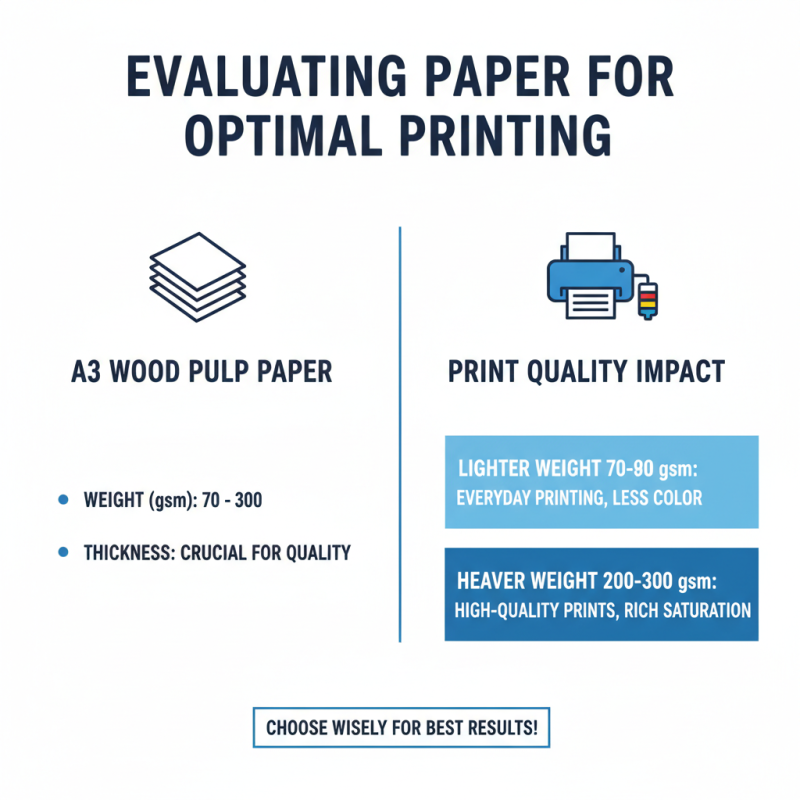
Another essential aspect is the weight of the paper. A weight range from 70 to 300 gsm is common for A3 papers. Lighter weights are suitable for everyday printing, while heavier weights are ideal for professional documents. However, selecting the incorrect weight may lead to issues like paper jams or subpar print clarity.
Moreover, consider the paper’s opacity. High-opacity papers reduce show-through from double-sided printing, ensuring crisp results. Experts recommend papers with an opacity rate above 90% for professional uses. This detail often goes overlooked, yet it can significantly affect your printed materials. Balancing quality and your specific needs is vital. Sometimes, the perfect paper might not exist, requiring a trade-off between features and budget.
Evaluating Paper Weight and Thickness for Optimal Printing Results
When selecting A3 wood pulp paper, understanding weight and thickness is crucial for print quality. The paper weight significantly affects how ink adheres and how colors appear. Common weights for A3 paper range from 70 gsm to 300 gsm. Lighter weights, such as 75 gsm, work well for everyday printing. However, they may not hold vibrant colors effectively. On the other hand, heavier weights like 200 gsm are better for high-quality prints. They provide rich saturation, essential for professional images.
Thickness also plays a vital role. A thicker paper often feels more substantial and can convey a sense of quality. Paper thickness is measured in microns, with standard copy paper at about 90 to 120 microns. When evaluating thickness, consider the printer's capability. Some printers struggle with thicker media, leading to jams or poor print quality.
**Tip 1**: Test different weights before making a bulk purchase. It’s easy to overlook how a slight change in weight alters the final product. A simple test run on various papers can save time and costs later.
**Tip 2**: Always check printer specifications. Many users overlook this, causing frustration during printing. Ensuring compatibility prevents unexpected issues.
Ultimately, reflecting on your specific needs can guide choices in weight and thickness, leading to better printing outcomes.
The Importance of Brightness and Opacity in A3 Wood Pulp Paper
When choosing A3 wood pulp paper, brightness and opacity are critical factors. Brightness is measured on a scale from 0 to 100. Papers with higher brightness levels produce more vibrant prints. Studies show that papers between 90 and 98 brightness levels enable colors to stand out. For instance, a report from the Technical Association of the Pulp and Paper Industry states that a brightness level of 92 can enhance color reproduction by up to 30%. This factor can significantly impact professional presentations or art prints.
Opacity is equally important. It determines how much light passes through the paper. High opacity means less light is transmitted, resulting in better print quality. Papers with 95% opacity or higher minimize show-through, ensuring clear visibility on both sides. According to a recent market analysis, the demand for high-opacity paper has increased by 20% in the last five years. Choosing the right opacity can save money on reprints. Low-opacity options may seem cheaper but can lead to unsatisfactory results. Not considering these aspects might result in regret later.
Assessing Environmental Certifications and Sourcing for Sustainability
When choosing A3 wood pulp paper, sustainability is crucial. Look for environmental certifications like FSC or PEFC. These labels ensure responsible forestry practices. In fact, a 2021 report from the Forest Stewardship Council indicates that sustainably managed forests can help combat climate change and promote biodiversity.
Consider the sourcing of your paper. A survey revealed that 72% of consumers prefer products made from recycled materials. This demand encourages manufacturers to adopt sustainable practices. However, many suppliers still fall short. They often lack transparency in their sourcing. It can be challenging to track the paper's origin reliably.
Carefully evaluate the life cycle of the paper. A study found that the production process can emit high levels of greenhouse gases. This adds stress to the environment. Therefore, weighing the environmental impact is essential. Not all A3 wood pulp papers are created equal. Some may claim eco-friendliness but do not back it up with solid data. Be cautious. Your choice matters.
Environmental Certifications for A3 Wood Pulp Paper
This bar chart displays the distribution of various environmental certifications for A3 wood pulp paper products. It highlights the significance of certifications such as FSC and PEFC in the market, promoting sustainable practices in the paper industry.
Comparing Cost and Quality: Finding the Right Balance for Your Needs
When choosing A3 wood pulp paper, balancing cost and quality is essential. High-quality paper enhances the final product, while cheaper options can compromise results. You need to evaluate what you prioritize. Is it durability, print quality, or cost-saving?
Consider your usage. If it's for presentations, opt for thicker paper to impress. For everyday printing, a lower weight may suffice. Experiment with different types; not every paper meets your needs perfectly.
Check the opacity. Thin paper can lead to bleed-through, ruining your printed material. You want to present professionally. Always sample before buying in bulk. It's a step often overlooked, but it saves regrets later.
Lastly, pay attention to the finish. Glossy, matte, or uncoated surfaces can drastically change how colors appear. Keep your audience in mind. Your choice should reflect your vision, not just current trends. Balancing cost and quality takes time and thought, but it's worth the effort in achieving the right fit.
10 Tips for Choosing A3 Wood Pulp Paper for Your Needs
| Tip Number |
Tip Description |
Cost ($/Ream) |
Quality Rating (1-10) |
| 1 |
Assess your printing needs |
20 |
8 |
| 2 |
Consider paper weight |
18 |
7 |
| 3 |
Check for brightness levels |
22 |
9 |
| 4 |
Look for recycled options |
15 |
6 |
| 5 |
Evaluate finish types (glossy, matte) |
25 |
10 |
| 6 |
Read customer reviews |
17 |
7 |
| 7 |
Consult a paper specialist |
30 |
9 |
| 8 |
Compare bulk purchase prices |
15 |
8 |
| 9 |
Understand the environmental impact |
21 |
7 |
| 10 |
Test samples before bulk order |
0 |
10 |