What is Thermal Printing Paper and How is it Used?
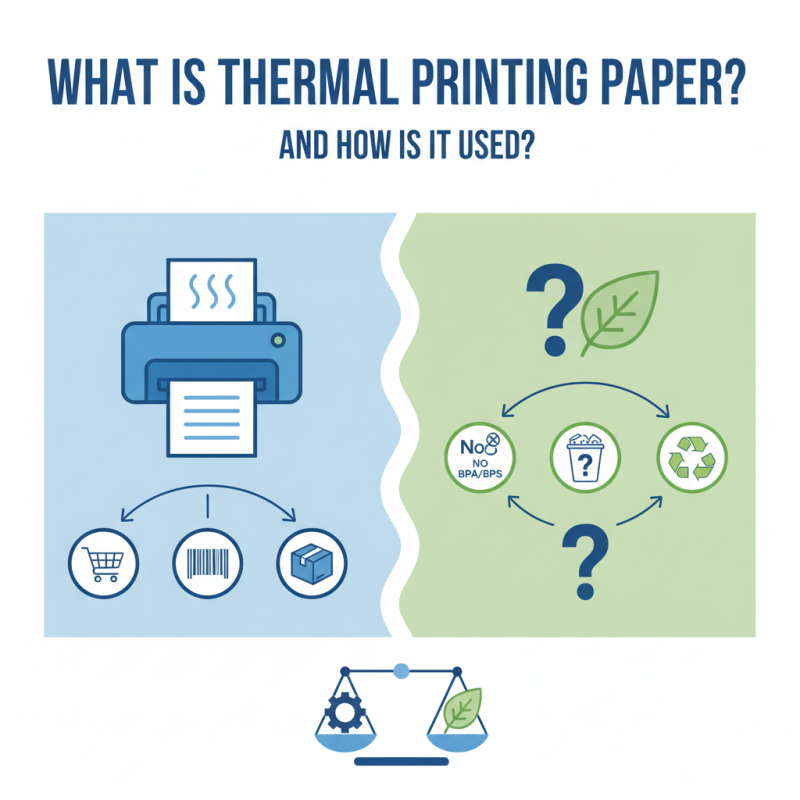
Thermal Printing Paper plays a vital role in many industries today. It is specifically designed for thermal printers, offering a unique and efficient way to produce images and text. Many businesses rely on this technology for printing receipts, labels, and barcodes. The paper's special coating reacts to heat, allowing quick and precise printing.
In the retail and logistics sectors, Thermal Printing Paper is indispensable. It ensures that transactions are smooth, and products are easily identified. However, one must consider the environmental impact of using such materials. Are we disposed to creating unnecessary waste? Many thermal papers contain BPA or BPS, which may harm health.
It's essential to weigh the convenience of Thermal Printing Paper against these concerns. Businesses must find a balance between efficiency and responsibility. Are alternative eco-friendly options available in the market? These questions urge us to reflect on our choices and the future of thermal printing.
What is Thermal Printing Paper?
Thermal printing paper is a special type of paper used in thermal printers. It has a coating that changes color when heated. This reaction allows images or text to be printed without the need for ink. It is commonly used for receipts, labels, and tickets.
The paper is often white or slightly off-white. It can feel smooth to the touch. Some might notice a glossy finish. When the printer heats the necessary areas, the coating blackens, creating a legible print. One downside is that thermal prints can fade over time. Exposure to heat, light, or certain chemicals can cause the print to disappear.
Users must be careful when handling printed materials. Thermal paper can also be more sensitive to scratches. In high-use environments, these prints may not last long. Despite its convenience, some find its durability lacking. Reducing waste often requires reconsideration of usage frequency. Exploring alternatives might benefit specific applications in the long run.
What is Thermal Printing Paper and How is it Used?
| Feature |
Description |
Common Uses |
| Material Composition |
Coated paper that reacts to heat |
Point of Sale (POS) systems |
| Printing Process |
Uses a thermal print head |
Receipt printing |
| Durability |
Sensitive to heat and light |
Shipping labels |
| Print Quality |
High-quality, sharp prints |
Barcode printing |
| Storage Conditions |
Store in a cool, dark place |
Inventory management |
| Environmental Impact |
May contain BPA or BPS |
Food labeling |
The Composition of Thermal Printing Paper
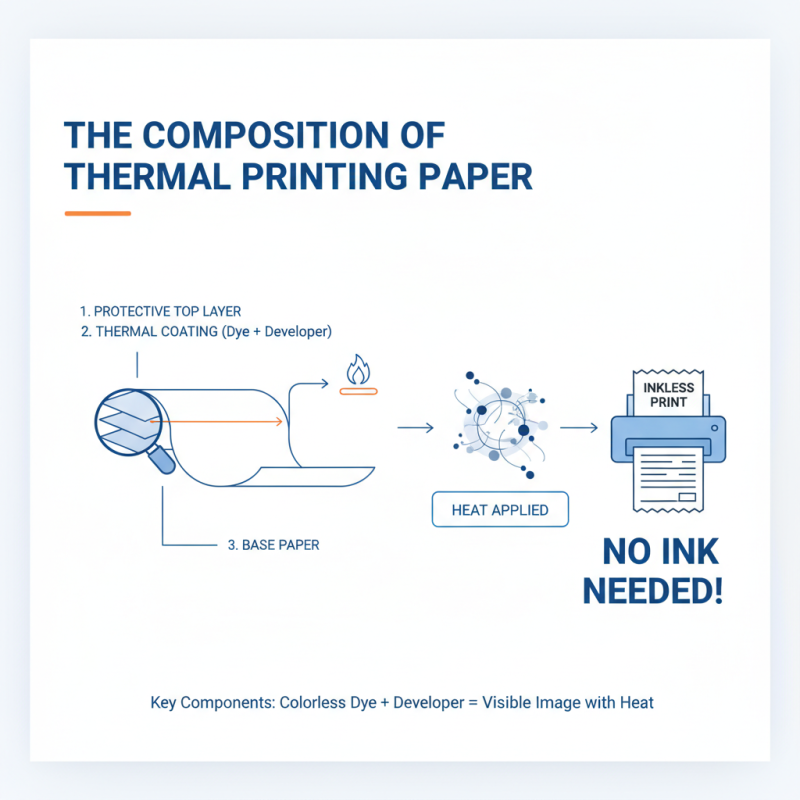
Thermal printing paper is a specialized type of paper designed for thermal printers. Its main component includes a thermal coating that reacts to heat. This coating is often made of colorless dye and a developer. When heated, the dye forms visible images. This unique composition eliminates the need for traditional inks.
In the thermal printing market, it is estimated that this technology represents over 20% of all printing methods. This growth is fueled by sectors like retail and logistics where quick, efficient printing is vital. The eco-friendly aspect of thermal paper is also noteworthy. Unlike traditional printing, it minimizes ink waste. However, issues like sensitivity to heat and light can be problematic. Users should store thermal paper properly to avoid unintended fading.
Despite its advantages, thermal printing does pose challenges. The durability of printed materials may be questioned. In high-temperature environments, prints can degrade faster. This reflection on longevity is crucial for businesses relying on thermal technology. Proper assessment of thermal printing paper and its drawbacks is essential for informed decision-making.
How Thermal Printing Works in Printers
Thermal printing operates on a simple yet effective principle. A thermal printer uses heat to transfer images onto paper. This technology is built into many devices, such as receipt printers. The process starts with thermal printing paper that is coated with a special heat-sensitive layer. When the printer activates, it applies heat to specific areas on the paper. This heat causes a chemical reaction, resulting in darkened areas that form text or images.
The inkless method of thermal printing has advantages. It reduces maintenance as there are no ink cartridges to replace. However, thermal prints can fade over time, especially when exposed to heat or sunlight. This poses challenges for businesses that rely on long-term document retention. The thermal printing process can also struggle with high-quality images, often producing less clarity than other methods.
Thus, while thermal printing is efficient and cost-effective, it can leave room for improvement in durability and print quality.
Applications of Thermal Printing Paper in Various Industries
Thermal printing paper is widely used across various industries due to its efficiency and convenience. Retail stores utilize it for receipts. The bright white surface easily captures ink, ensuring clear and readable text. These receipts are crucial for customer transactions and returns. In restaurants, thermal paper is employed for order tickets. The quick printing speed helps ensure that customers receive their orders without delay.
Logistics companies also rely on thermal printing paper. It is used for shipping labels that contain important tracking information. The durability of the paper helps it withstand various environmental conditions. However, its sensitivity to heat can lead to issues. Exposure to sunlight or high temperatures can make printed text fade. This limitation is often overlooked in the fast-paced logistics sector.
In healthcare, thermal printing is common for label and prescription printing. Clear labeling is essential for patient safety. Yet, some healthcare providers struggle with the longevity of thermal prints. It can cause problems in long-term medication management. Issues like fading labels can lead to mistakes. Users must be mindful of these challenges to ensure proper usage.
Advantages and Disadvantages of Using Thermal Printing Paper
Thermal printing paper has distinct advantages and disadvantages. One major advantage is its speed. Thermal printers can print labels, receipts, and tickets quickly. According to industry reports, thermal printing can be 20% faster than traditional inkjet printers. This efficiency is vital in retail settings where time is money.
However, there are downsides to consider. Thermal paper is sensitive to light and heat. Prolonged exposure can cause printing to fade. Research suggests that thermal printed materials may fade within months if not stored properly. Additionally, the chemical coating on thermal paper can raise environmental concerns. It often contains BPA, a substance linked to health risks.
User experience varies too. Some users find the image quality acceptable, while others feel it lacks clarity. For critical documents, this inconsistency can be a drawback. It’s essential to weigh these factors carefully when choosing thermal printing paper for business needs.