Why Choose the Right Thermal Printer Rolls for Your Business?
Choosing the right Thermal Printer Rolls for your business is vital. These rolls are not merely a supply; they are essential tools that impact your operations. The quality of rolls can directly influence print clarity, durability, and overall performance. A poor choice could lead to frustrating printing issues and loss of valuable time.
Businesses often overlook the importance of selecting the right rolls. Many opt for cheaper options, not realizing the long-term costs involved. High-quality Thermal Printer Rolls can improve efficiency and reduce waste. Your brand’s image relies on clear and reliable printing. Therefore, making an informed choice is crucial.
Consider your specific needs and printing environment. Factors such as heat sensitivity, roll size, and compatibility with your printer matter. It's worth spending time to research. This decision should reflect understanding, experience, and expertise to ensure you make the best choice for your business's success.

Understanding Thermal Printer Rolls: Types and Specifications
Choosing the right thermal printer rolls is crucial for your business. Different types are available, each with specific characteristics. Understanding these types helps optimize printing efficiency and reduces operational costs.
Thermal printer rolls generally fall into two categories: direct thermal and thermal transfer. Direct thermal rolls use heat-sensitive paper and are great for short-term labels. However, they may fade over time. On the other hand, thermal transfer rolls use a ribbon to transfer ink onto labels, ensuring longevity and durability. Consider the environment where the prints will be used. For instance, outdoor conditions might require more robust materials.
Tips: Always check the size of your printer rolls. Mismatched sizes can result in jams or wasted materials. Also, pay attention to the material quality. Low-grade rolls might save costs but can lead to higher replacement rates. A smaller upfront investment could lead to increased effort and expense in the long run. Lastly, keep an eye on storage conditions. Improper storage can degrade the quality of thermal rolls over time.
Sales Comparison of Different Thermal Printer Rolls Types
Key Considerations for Selecting the Right Thermal Printer Rolls
When selecting thermal printer rolls, businesses should consider several key factors. First, the paper quality is crucial. High-quality thermal paper ensures clear and legible prints. According to the Technical Association of the Pulp and Paper Industry, poor quality can lead to fading and smudging. This can negatively impact customer experience and record keeping. Research shows that using inferior rolls results in a 20% increase in reprinting costs.
Another important consideration is the roll size. Businesses often overlook choosing the right dimensions, leading to compatibility issues. Various industries, from retail to healthcare, require specific sizes to fit their printers. Ensuring proper fit helps prevent jams and extends printer life. A study by the International Journal of Advanced Manufacturing Technology suggests that mismatched sizes contribute to a 15% increase in service calls.
Lastly, it's essential to evaluate the product’s shelf life. Thermal rolls have a shelf life, impacted by environmental factors. Exposure to light and heat can degrade the paper. According to industry reports, managing inventory effectively can reduce waste and ensure availability. It’s vital to balance quality and cost, taking these considerations into account. Using low-quality rolls might initially save money, but hidden costs often emerge, affecting overall business efficiency.
Why Choose the Right Thermal Printer Rolls for Your Business? - Key Considerations for Selecting the Right Thermal Printer Rolls
| Dimension |
Material Type |
Coating Type |
Roll Length (meters) |
Core Diameter (mm) |
Compatibility |
| 4" x 6" |
Thermal Paper |
Top Coated |
90 |
25.4 |
Label Printers |
| 2" x 3" |
Thermal Paper |
Bottom Coated |
50 |
12 |
Receipt Printers |
| 3" x 4" |
Thermal Paper |
Top Coated |
75 |
40 |
Shipping Labels |
| 5" x 7" |
Thermal Paper |
Bottom Coated |
100 |
25.4 |
Barcodes and Tags |
Impact of Quality Thermal Printer Rolls on Business Operations
High-quality thermal printer rolls significantly impact business operations. When a business invests in reliable printing materials, it can reduce costs related to waste. Poor quality rolls can lead to smudged prints and frequent paper jams. This not only frustrates employees but also affects overall productivity.
Using the right printer rolls ensures clear and accurate labels or receipts. When customers receive well-printed documents, it enhances their experience. Conversely, inconsistent print quality can lead to misunderstandings and dissatisfaction. Businesses might lose customers due to these simple issues. Choosing thermal rolls wisely reflects a commitment to quality and efficiency.
Moreover, the cost of switching to inferior rolls is often overlooked. Companies may save money upfront but face hidden costs later. Increased downtime and reprints accumulate expenses. It's essential to evaluate the long-term implications of printing choices. Businesses should continuously reflect on their needs and make informed decisions for optimal operations.
Cost Efficiency: Balancing Price and Quality in Thermal Printer Rolls
When choosing thermal printer rolls, cost efficiency remains a vital concern for businesses. Balancing price and quality requires thorough consideration. Lower-cost options might seem attractive initially. However, they often lack reliability and durability. This can lead to frequent replacements and wasted resources. It’s essential to analyze long-term expenses rather than focusing solely on the upfront cost.
Quality thermal printer rolls ensure clear prints and minimize errors. Blurry labels or receipts can damage a brand's reputation. It's critical to invest in rolls that meet business needs consistently. Consider the material of the rolls; subpar materials can degrade over time. Testing different suppliers can reveal which options provide optimum quality. Always look for users' reviews to gain insights into performance and reliability.
In business, we strive to balance operational costs with quality service. Many companies fall into the trap of choosing cheap products. This common mistake leads to larger costs down the road. A careful evaluation of trade-offs is necessary. Prioritize quality to enhance customer satisfaction and reduce long-term expenses. Reflecting on past choices can guide future decisions.
Ensuring Compatibility: How to Match Printer and Roll Types
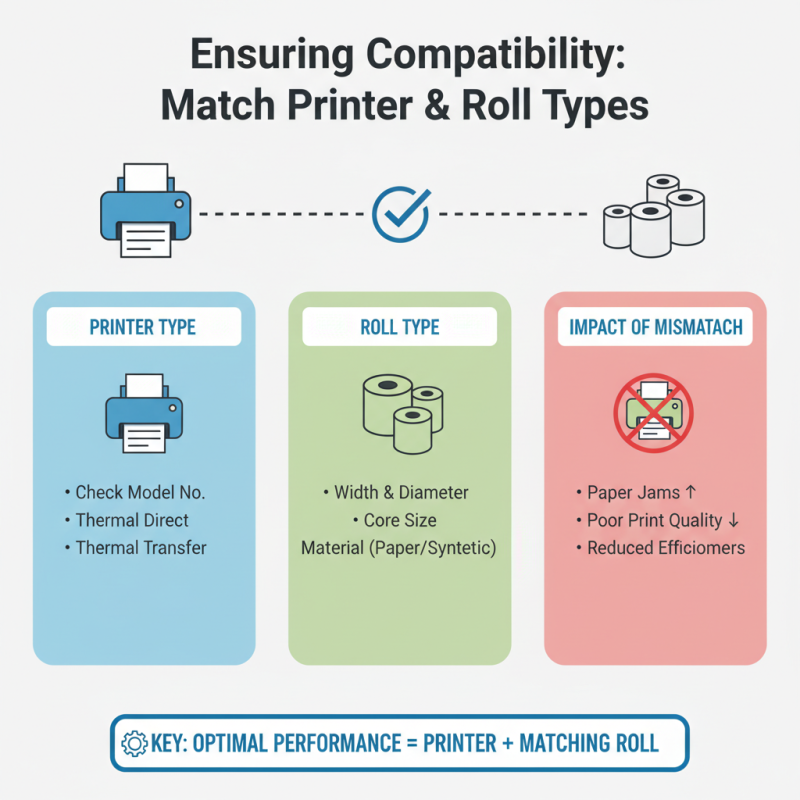
When choosing the right thermal printer rolls, compatibility is a key factor. Each printer model requires specific roll types for optimal performance. According to recent industry reports, mismatched rolls can lead to increased paper jams and poor print quality. This can impact a business's efficiency and customer satisfaction.
To ensure compatibility, start by checking your printer's specifications. Roll diameter and core size are crucial factors. For instance, a printer that supports 2-inch wide rolls may not accommodate a 3-inch roll. Make certain that the thermal sensitivity matches as well. Mismatched sensitivities can lead to faded or unreadable prints, which is not acceptable in many industries.
Tip: Always keep a reference chart of your printer’s required roll sizes and types. It’s an easy way to avoid confusion.
Another important aspect is the material of the rolls. Some printers work better with direct thermal rolls, while others require thermal transfer rolls. Understanding these nuances can prevent costly mistakes. Investing time in research can save money and frustration in the long run.
Tip: Test different rolls in smaller batches to see which performs best before making larger purchases. This method can reveal unexpected issues that need to be addressed.