2026 How to Choose the Best Thermal Printing Paper for Your Needs?
In the ever-evolving world of printing solutions, selecting the right thermal printing paper is crucial. Recent industry reports suggest that the demand for thermal printing materials is projected to grow by 4.5% annually through 2028. This growth indicates a broader trend towards efficient and high-quality printing practices across various sectors.
When choosing thermal printing paper, various factors come into play. The right paper should align with the specific needs of the user, whether for retail, medical, or logistics applications. Different thermal printing papers vary in quality, durability, and compatibility. A mismatch can lead to poor print quality and increased operational costs.
Many users mistakenly overlook the importance of the paper's coating and thickness. Choosing the appropriate thermal printing paper can significantly enhance print clarity and longevity. However, not everyone understands the nuances of these products. A little reflection on the unique requirements of each situation can lead to better outcomes. Understanding these aspects can help businesses make informed decisions, ultimately leading to greater efficiency and cost savings.

Understanding Thermal Printing Paper Types and Their Applications
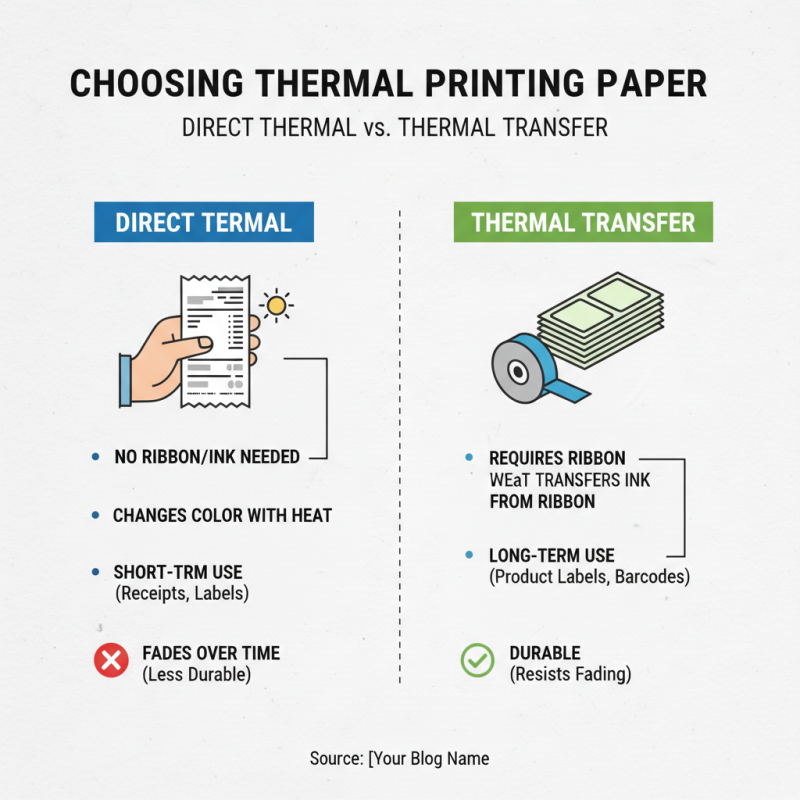
When choosing thermal printing paper, understanding the various types is crucial. Thermal paper mainly falls into two categories: direct thermal and thermal transfer. Direct thermal paper works well for short-term applications, such as receipts. This paper changes color when exposed to heat, eliminating the need for ink. However, direct thermal prints can fade over time. If you need durability, this may not be the best option.
On the other hand, thermal transfer paper uses ink ribbons. This method involves printing images onto a surface via heat transfer. It is ideal for labels and products requiring longevity. The prints maintained on thermal transfer paper resist fading and moisture. Still, it often leads to higher operational costs due to the additional components required.
Consider your specific needs before deciding. Analyze how long you require the print to last. Will it be exposed to light or heat? Think about your application. The type of printer you own may also limit your options. Ultimately, it’s essential to balance your budget with quality.
Evaluating Printing Quality: Factors Influencing Thermal Paper Performance
When evaluating the printing quality of thermal paper, several factors come into play. The composition of the paper affects ink adherence. High-quality thermal papers use advanced coatings. These coatings enhance durability and print clarity. According to a recent industry report, papers with a smooth finish can increase print lifespans by up to 30%. Smoother surfaces also reduce print head wear.
Temperature sensitivity is another crucial aspect. Thermal papers react to heat during printing. Different formulations respond variably to heat levels. For instance, a document might fade quickly under sunlight exposure when using lower-quality paper. The same report states that temperature variations can affect print quality by as much as 40%. Users often overlook this factor.
Environmental conditions also play a pivotal role. High humidity can degrade paper performance. In such conditions, the print might bleed or smudge easily. However, over-drying can cause brittleness. Finding the right balance is key. Many users report dissatisfaction over unexpected fading. It seems that not all thermal papers respond predictably to printing environments. Each decision must be made carefully.
Determining the Right Coating for Enhanced Durability and Longevity
When selecting thermal printing paper, the coating matters significantly. A proper coating enhances durability and longevity, ensuring printed materials withstand the test of time. Some studies indicate that up to 40% of printed documents can fade within a year without adequate protection. This highlights the importance of choosing the right coating for specific applications.
Consider the environment where the printed documents will be used. For example, papers designed for retail settings often require a scratch-resistant coating. In contrast, documents exposed to humidity need a moisture-resistant finish. According to industry data, papers with specialized coatings can last 50% longer in adverse conditions. However, not all coatings are equal. Some may cause ink smudging or poor adhesion if not well-matched with the surface.
Another critical aspect is the cost versus benefit of various coatings. Premium options may provide enhanced durability but can be significantly more expensive. A 2022 report indicated that businesses could save 30% on reprinting costs by investing in higher-quality thermal paper. It is essential to weigh the potential savings against the initial investment for long-term use. Failing to do so might lead to unnecessary spending and frustration when documents deteriorate quickly.
Comparing Pricing: Cost-Effectiveness of Different Thermal Paper Brands
When selecting thermal printing paper, cost-effectiveness becomes a key concern for businesses. Recent industry reports indicate that the price differences between brands can be significant, affecting overall operational costs. For instance, entry-level thermal papers might cost around $25 for a case of 50 rolls, while premium options can exceed $60 for the same quantity. That’s a notable price gap.
Beyond initial costs, businesses should consider longevity and print quality. Some cheaper thermal papers may fade quickly, leading to additional reprints and wasted resources. Data shows that low-quality thermal paper can lead to a 20% increase in overall printing expenses due to such reprints. Also, the environmental impact is a complex issue. Cheaper thermal papers often use harmful chemicals, raising long-term liability concerns.
Choosing the best thermal paper requires balancing quality with cost. A detailed breakdown of printing volume also plays a pivotal role. A lower upfront cost might tempt companies, but total cost of ownership might differ. Reflecting on these aspects can lead to more strategic purchasing decisions.
2026 How to Choose the Best Thermal Printing Paper for Your Needs? - Comparing Pricing: Cost-Effectiveness of Different Thermal Paper Brands
| Paper Type |
Width (mm) |
Length (m) |
Roll Diameter (mm) |
Price per Roll ($) |
Cost per Meter ($) |
| Standard Thermal Paper |
80 |
100 |
40 |
15.00 |
0.15 |
| Premium Thermal Paper |
80 |
150 |
50 |
20.00 |
0.13 |
| Eco-Friendly Thermal Paper |
80 |
120 |
45 |
18.00 |
0.15 |
| High-Quality Thermal Paper |
80 |
200 |
60 |
25.00 |
0.12 |
Assessing Supplier Reliability: Key Metrics in Thermal Paper Selection
When selecting thermal printing paper, supplier reliability is crucial. It’s not just about finding a low price. Assessing key metrics helps ensure you choose a dependable source. Start by looking at the supplier's production consistency. Have they maintained quality over time? The paper’s durability can vary significantly among suppliers. A poor quality product may lead to missed prints or faded images.
Consider also the supplier’s customer service. Are they responsive to inquiries? Do they handle complaints effectively? A supplier who prioritizes communication can simplify the purchasing process. It's essential to have a partner who understands your needs. A lack of support can lead to frustration and wasted resources.
Finally, review customer feedback. It offers insight into the supplier’s reliability. Take this step seriously. Not all reviews are genuine, so seek out multiple sources. Look for patterns in the feedback. Supplier reliability can make or break your thermal printing projects. Unreliable suppliers can cost money and time. It’s vital to reflect on these metrics carefully. Small oversights can lead to significant issues down the line.