2026 How to Choose the Best Bond Paper for Your Needs?
Choosing the right bond paper is crucial for any project. As industry expert John Turner wisely noted, “The quality of paper can define the outcome.” Bond paper serves various purposes. It is used in offices, schools, and printing shops. But not all bond paper is created equal.
Selecting the best bond paper requires understanding your specific needs. Different weights and finishes can affect both appearance and functionality. For instance, a heavy bond paper works better for formal documents. In contrast, lighter weights are more suitable for general printing tasks.
However, it can be overwhelming. Many people struggle to choose the right type. They often ignore critical factors like brightness and smoothness. Reflecting on your paper needs may prepare you for better choices. A thoughtful selection leads to impressive results. Proper bond paper can enhance your presentation, while the wrong choice can hinder it.
Understanding Bond Paper: Types and Uses
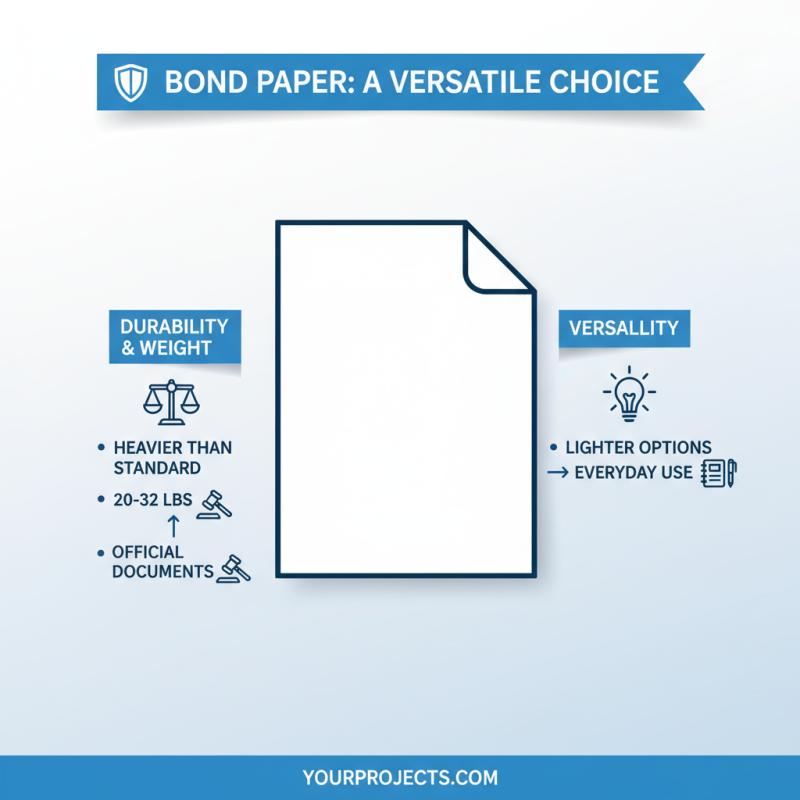
Bond paper is a versatile choice for various projects. It is known for its durability and weight. Typically heavier than standard printing paper, bond paper comes in varied weights, usually ranging from 20 to 32 pounds. Heavier paper works well for official documents. Lighter options are better for everyday use.
There are different types of bond paper. Some are uncoated, offering a classic feel and good ink absorption. Others are coated, providing smoothness and vibrant print quality. This makes coated options ideal for presentations. Uncoated paper allows for easy writing and is great for note-taking.
Choosing the right bond paper can be tricky. You might think about the purpose first. Consider the project you’re working on. Will it be for high-quality prints or simple documents? Reflect on this. Sometimes, the more expensive option isn’t needed. You could achieve great results with a standard choice.
Evaluating Weight and Thickness in Bond Paper Selection
When selecting bond paper, evaluating weight and thickness is crucial. The weight of bond paper is often measured in grams per square meter (GSM). Common weights range from 60 GSM to 120 GSM. For most office needs, papers in the 70-90 GSM range are sufficient. These weights provide a balance of thickness and flexibility. However, choosing higher GSM does not always guarantee better quality. Some users might find 120 GSM too thick for everyday printing.
Thickness, measured in mils or points, also plays a significant role. A standard bond paper can be around 4 mils thick, while heavier grades can reach up to 7 mils. This difference impacts how the paper feels and performs during printing. Thicker papers tend to resist ink bleed, which is essential for double-sided printing. Yet, thicker papers can jam printers if not compatible. According to industry reports, 45% of printing issues stem from poor paper choice, often due to incorrect weight or thickness.
Consider the intended use. For professional documents, weight can indicate quality. Heavier paper conveys a sense of importance. In contrast, lighter paper may suffice for drafts. Reflect on your needs; it’s okay to experiment with different specifications. Adjusting weight and thickness can lead to significant improvements in print quality. Not every situation calls for the heaviest option. Sometimes, lighter choices may yield better results. Finding the perfect balance requires testing and reflection.
Considering Paper Finish: Glossy vs. Matte Options
When choosing bond paper, the finish matters.
Glossy and
matte options serve different purposes.
Glossy paper shines under light. It enhances colors and images.
Perfect for photographs or vibrant graphics.
However, glossy surfaces can reflect glare, making text hard to read.
Matte paper, in contrast, offers a softer look. It absorbs light, providing a more subtle presentation. This finish is great for professional documents and reports. It allows for easy writing and printing without smudging. However, colors may appear less vibrant.
Tips: Consider your project's objective. If you're showcasing art or photography,
glossy paper could be ideal. Yet, for formal presentations,
matte may be better.
Experiment with samples to feel the difference. Always reflect on your choice to find
what resonates best for your needs.
Assessing Color and Brightness for Visual Impact
When selecting bond paper, color and brightness greatly influence its visual impact. Research shows that brighter papers can enhance readability and visual appeal. According to industry studies, papers with a brightness level above 90 are perceived as more vibrant. This is especially true in marketing materials and presentations where first impressions matter.
Choosing the right color can also elevate your project. Colors can evoke emotions. For example, blue can suggest trust, while red may elicit urgency. A 2021 survey indicated that 85% of consumers base their purchasing decisions on color. Thus, selecting the right shade is crucial.
However, consider that not all high-brightness papers are suitable for every application. Some designs may look harsh on overly bright surfaces. Balance is key. Ensure your color choices harmonize with brightness levels, reflecting the intended message. Aim for a blend that stands out without overwhelming your audience. This thoughtfulness in selection can lead to more effective communication.
Color and Brightness Assessment of Bond Paper
Choosing Bond Paper for Different Printing Needs
When choosing bond paper, it's essential to consider the specific needs of your printing projects. Different types of bond paper can significantly affect the final outcome. For instance, standard bond paper, typically used for everyday printing, may not suffice for high-quality presentations or art prints. Data from recent industry reports highlight that over 65% of professionals prefer using heavier weights for color-rich prints. A paper weight of 24 lb or higher often yields better results.
Texture is another aspect to consider. Smooth surfaces are ideal for sharp text and images, while textured papers may add a tactile element to designs. Interestingly, 30% of users reported dissatisfaction with smooth paper due to ink smudging. A careful selection based on your printer type can mitigate this issue. You might consider using coated bond paper for enhanced durability, especially if the printed material will be handled frequently.
Additionally, it's essential to think about environmental impact. Many printing companies are now leaning towards recycled bond paper. Research indicates that around 45% of businesses are switching to sustainable options. However, this may result in slightly lower print quality. Balancing quality and sustainability can require careful thought and experimentation.
2026 How to Choose the Best Bond Paper for Your Needs? - Choosing Bond Paper for Different Printing Needs
| Paper Type |
Weight (GSM) |
Best Use |
Print Quality |
Price Range (per 500 sheets) |
| Standard Bond |
75 |
Everyday Printing |
Good |
$20 - $30 |
| Heavyweight Bond |
90 |
Reports & Presentations |
Excellent |
$30 - $50 |
| Lightweight Bond |
60 |
Drafts & Internal Use |
Fair |
$15 - $25 |
| Bright White Bond |
75 |
Color Printing |
High |
$25 - $40 |
| Color Bond |
80 |
Marketing Materials |
Very High |
$35 - $55 |