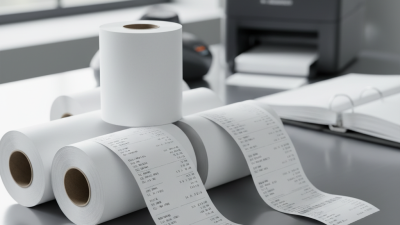
How to Choose the Best Receipt Rolls for Your Printer?
In today's fast-paced retail environment, selecting the right receipt rolls for your printer is crucial. Expert David Anderson, a leader in the receipt roll industry, once said, "Choosing the right roll can save you time and money." This insight holds true as businesses face the challenge of optimizing their operations.
Receipt rolls vary significantly in quality and type. Different printers require specific sizes and materials. It's vital to match your printer's requirements with the available options. A mismatch can lead to paper jams or poor print quality. These challenges can impact your customer experience and operational efficiency.
Consider the durability of receipt rolls too. Some rolls fade quickly, while others withstand the test of time. It's essential to balance cost with quality. Many users overlook this factor, leading to frequent replacements. Reflecting on choices is necessary; not all rolls will suit every business. In the end, informed decisions can enhance productivity and customer satisfaction.
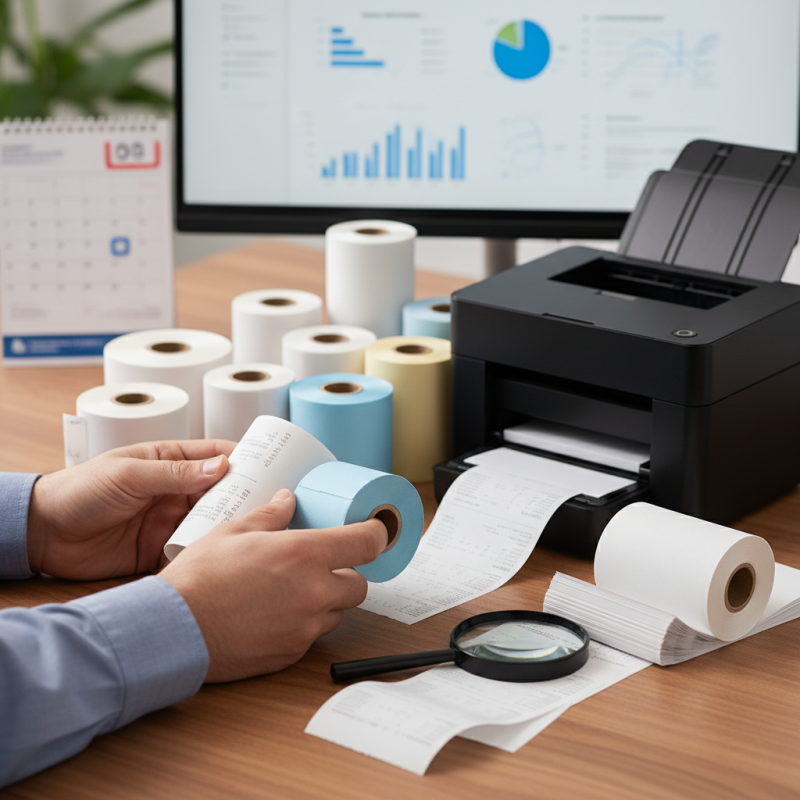
Understanding Different Types of Receipt Rolls for Printers
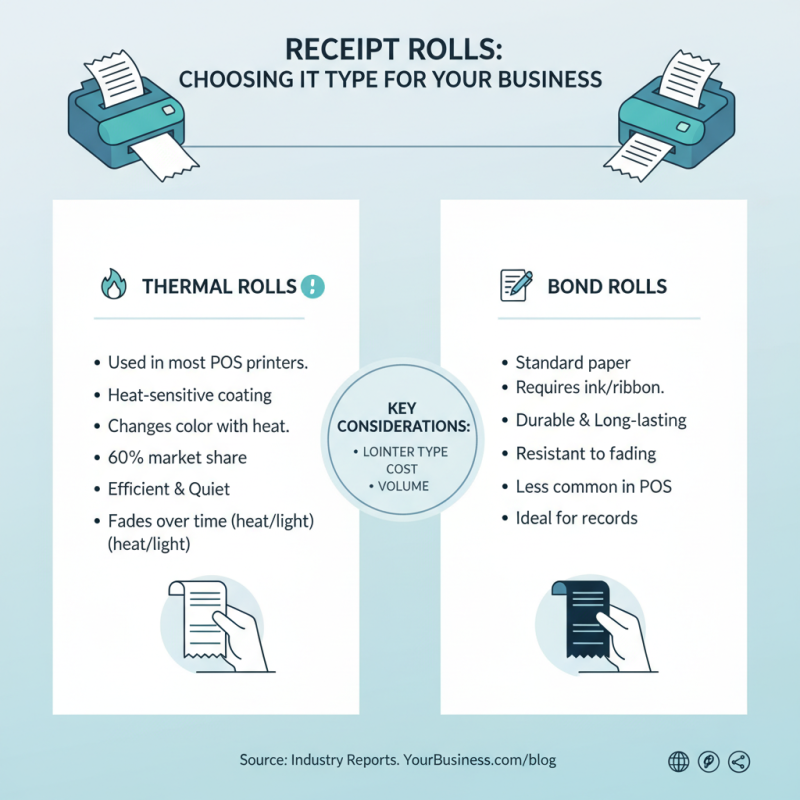
Choosing the right receipt rolls for your printer can significantly affect your business operations. Understanding the different types of receipt rolls is crucial. Paper rolls come in thermal and bond types. Thermal rolls are commonly used in most point-of-sale printers. They are made with a thermal-sensitive coating that changes color when exposed to heat. According to industry reports, thermal paper accounts for over 60% of the receipt paper market due to its efficiency and quiet printing. However, they can fade over time when exposed to heat or light.
Bond rolls, on the other hand, are less susceptible to fading. They utilize regular paper coated with a layer of ink, making them more suitable for applications where longevity is important. However, they require more time to dry, which could slow down operations during peak hours. Many businesses overlook the use of bond paper, but it may be a wise choice for those needing durable receipts.
Size also matters when choosing receipt rolls. Standard sizes include 80mm and 57mm widths, impacting the amount of information printed. Ensuring the right width can prevent paper jams and inefficiencies. Some businesses assume all printers accept all sizes, but this is not true. Compatibility is crucial and should be double-checked against printer specifications. Research shows that incorrect sizes account for approximately 15% of operational delays in retail environments.
Evaluating Printer Compatibility for Optimal Receipt Roll Performance
When selecting receipt rolls for your printer, compatibility is key. Different printers require different roll sizes and materials. Check your printer's specifications carefully. Measure the width and diameter of the rolls your printer accepts. Not all rolls are universal. Some may fit while others won't, leading to frustrating jams.
Consider the type of receipt paper as well. Thermal paper is popular, but some printers may work better with bond paper. Each has its pros and cons. Thermal paper provides clear printing but can fade with heat. Bond paper is durable but could smudge. Understand your business needs. Is clarity more important than longevity?
Sometimes, the right fit may vary. A roll that works in one situation might not perform in another. Testing different types can help you find the optimal match. Don't hesitate to rethink your choices. Adapting to your printer's needs will improve efficiency. Consider this a process of exploration. Each choice informs the next one, leading to better performance in your printing tasks.
Assessing Paper Quality: Importance of GSM and Coating in Receipt Rolls
When selecting receipt rolls, the quality of the paper is crucial. GSM, or grams per square meter, serves as a critical indicator. A higher GSM typically means thicker, more durable paper. Rolls between 70 to 80 GSM are common. They strike a balance between sturdiness and cost. However, don't overlook the finish of the paper. Coated paper offers enhanced gloss and print quality, making receipts easier to read.
Some reports suggest that around 50% of businesses encounter issues with low-quality receipt rolls. They often result in unreadable or faded receipts. This can frustrate customers and lead to operational inefficiencies. Using higher-quality rolls can prevent this hassle. Additionally, the coating can protect the paper from moisture. This is vital since many locations are prone to spills.
Tips: Always check the GSM in product specifications. A roll with 80 GSM might be a better choice for high-traffic areas. Pay attention to the coating type as well. Some coatings can affect the speed of printing, which is another important factor. Investing in quality rolls can save money in the long run. You'll waste less on reprints and improve customer satisfaction.
Comparative Analysis of Receipt Roll Quality Based on GSM and Coating
Analyzing Cost-Effectiveness: Bulk Buying vs. Individual Rolls
When selecting receipt rolls, the question of cost-effectiveness often arises. Many businesses face the dilemma of buying in bulk versus purchasing individual rolls. A recent industry report found that bulk purchasing can lower costs by up to 20%. However, this saving hinges on proper usage. If rolls go unused, waste accumulates, offsetting any potential savings.
Bulk buying often comes with storage issues. Too much paper can take up valuable space. Small businesses, particularly, might struggle with overstock. On the other hand, purchasing individual rolls leads to less waste. Yet, the cost per roll is generally higher. Companies should assess their actual needs before deciding.
**Tips:** Track your usage patterns. This data helps in making informed decisions. Also, consider shelf life. Not all rolls have the same durability. Choosing the wrong type can lead to performance issues. Assessing your printer's requirements is crucial. Find the right balance of cost and efficiency to avoid unnecessary spending.
Exploring Eco-Friendly Options: Biodegradable and Recyclable Receipt Paper
When choosing receipt rolls, eco-friendly options are increasingly important. Biodegradable and recyclable receipt paper can significantly reduce environmental impact. Traditional receipt paper often contains harmful chemicals, making its disposal problematic. Shifting to green alternatives can help businesses promote sustainability while maintaining efficiency.
Biodegradable receipt paper breaks down naturally over time. This means less waste in landfills. Recyclable options are also available. They can be processed without releasing toxic substances. However, it’s crucial to ensure proper disposal methods are followed. Not all recycling programs accept these papers, leading to confusion. Educating staff on the correct disposal of these materials is essential.
Many businesses overlook the importance of sustainable choices. While it can be tempting to prioritize cost over eco-friendliness, the long-term benefits are undeniable. Customers appreciate green initiatives and are more likely to support businesses that care about the planet. Finding an ideal balance between cost and environmental responsibility takes time and effort. It’s a journey worth embarking on.