How to Choose the Best Paper Receipt Rolls for Your Business Needs?
In the fast-paced world of retail, choosing the right Paper Receipt Rolls is crucial for business efficiency. A recent report from the National Retail Federation highlights that effective transaction processes can increase customer satisfaction by up to 30%. Expert Emily Carter states, "Quality paper rolls not only reduce printer jams but also enhance the overall shopping experience."
Selecting Paper Receipt Rolls involves several considerations, including size, compatibility, and thermal quality. For instance, businesses need rolls that match their printers and are durable under various conditions. It’s not just about the cost; the right choice can significantly affect operational efficiency.
Many businesses overlook the importance of selecting high-quality rolls. A poor choice may lead to frequent printer issues and dissatisfied customers. Reflecting on past experiences can guide improvements. Investing in the right Paper Receipt Rolls can ultimately support a smoother, more efficient operation, reinforcing the legacy of a well-serviced business.
Understanding the Different Types of Paper Receipt Rolls Available
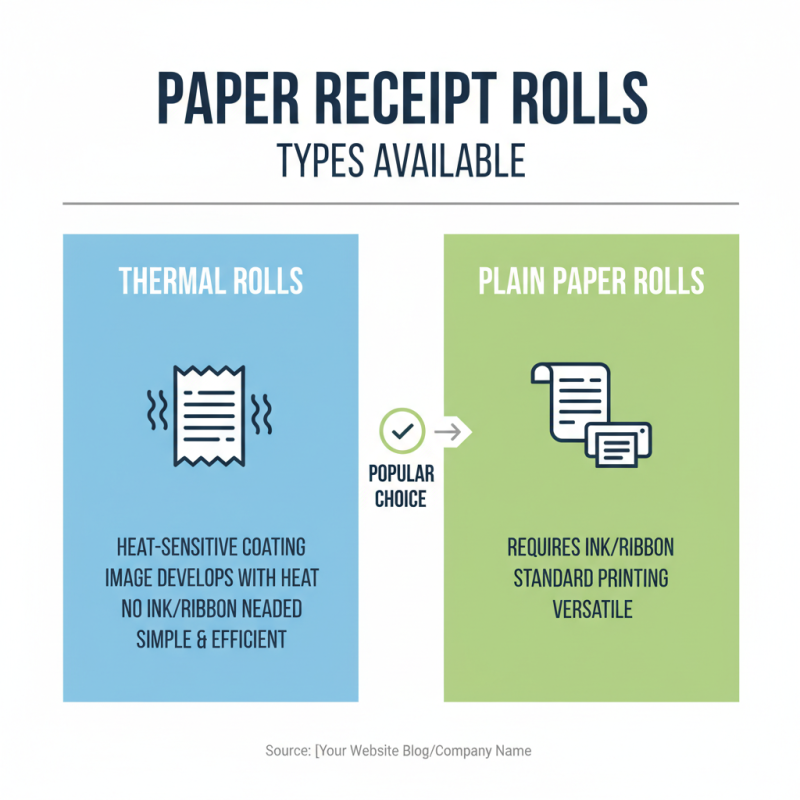
When selecting paper receipt rolls for your business, understanding the types available is crucial. Two main categories exist: thermal and plain paper rolls. Thermal rolls are coated with heat-sensitive material. They develop an image when heated. Plain paper rolls require ink or ribbon for printing. Businesses often favor thermal rolls for their simplicity and efficiency.
According to industry reports, over 70% of retail transactions use thermal printing technology. This popularity highlights its effectiveness for daily operations. Thermal rolls come in various widths and lengths, suitable for different printers. For example, 80mm rolls are common in retail environments. Choosing the right size is essential to avoid printer jams and wasted material.
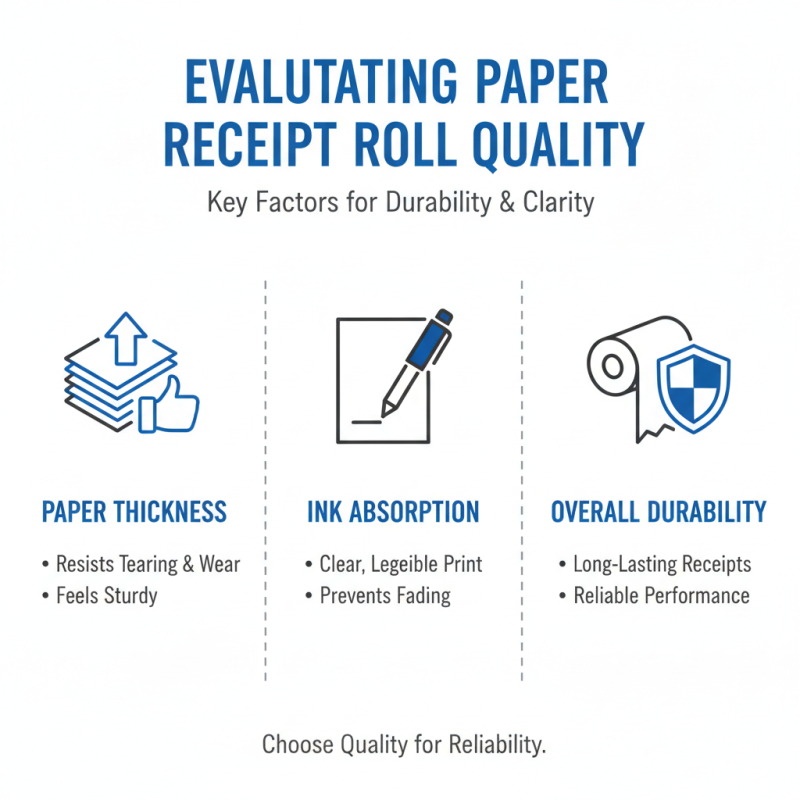
Tips for selection: check compatibility with your printer model. Invest in quality rolls to ensure clear printing. Low-quality rolls may lead to smudging and fading, complicating transaction records. Consider storage conditions, as humidity can affect paper quality. Proper storage helps maintain the integrity of your rolls for long-lasting use. Reflecting on these details can lead to better operational decisions.
Factors to Consider When Selecting Paper Receipt Rolls for Your Business
When selecting paper receipt rolls, consider size and thickness first. The standard width for rolls is usually 80 mm or 57 mm. But is that the right fit for your printer? If the dimensions clash, you’ll waste time and resources. Thickness also matters. Thinner rolls might save costs, but they may jam more easily in the printer. You need to balance quality and affordability.
Next, think about the quality of the paper. Some rolls use thermal paper that can fade over time. If your receipts need to last, opt for higher-quality options. Low-quality paper can lead to customer complaints. Additionally, check for BPA-free variants. Health concerns are growing, and offering safe products reflects well on your business.
Another detail is the roll core size. Common sizes are 12 mm or 25 mm. If your printer requires a specific core size, it’s crucial. Improperly fitting rolls can lead to production delays. Always double-check your printer’s specifications. A few minutes of research can save hours of frustration later on. Selecting the right roll isn’t just about cost; it impacts customer experience and operational efficiency.
Factors to Consider When Selecting Paper Receipt Rolls
Identifying the Right Size and Width for Your Receipt Printer
When selecting paper receipt rolls for your business, size and width are crucial. The width directly affects what information you can print. Most receipt printers use rolls between 57mm and 80mm wide. It's essential to check your printer's specifications to avoid mismatches. A roll that is too wide may jam. Conversely, a roll that's too narrow can leave unwanted margins.
Tips: Always measure your printer's printing area. This helps in determining the right width. Consider the amount of detail you need on your receipts. Wider rolls offer more space for longer item names or additional information. It’s good to think about your customer experience here. A better-looking receipt can enhance your brand image.
Many users overlook roll height. Heights typically range from 40mm to 80mm. A roll too short may require frequent changes. This could slow down service during busy hours. On the other hand, oversized rolls may not fit well. Test different heights to find the best match. Make sure they fit comfortably within your printer.
Choosing the right size and width is essential. It may seem trivial, but it impacts your daily operations. Take the time to assess your needs. This can save you from headaches later on. You might even find opportunities for improving your existing setup.
Comparing Prices and Suppliers for Cost-Effective Options
When selecting paper receipt rolls, price comparison is essential. According to recent industry reports, the average cost of receipt rolls ranges from $15 to $25 per 100 rolls. Depending on your order size, you can find significant savings by buying in bulk. However, not all suppliers offer competitive prices. Neglecting to research different suppliers could lead to wasted resources.
Supplier features play a crucial role in cost-effectiveness. Prices can vary widely based on quality and delivery speed. Some suppliers offer lower prices but may compromise on paper quality. A 2022 study indicated that using high-quality paper can actually save money in the long term, as it reduces printer maintenance. Balancing cost with quality is necessary; you might pay a bit more initially but save overall.
Many businesses overlook the importance of ongoing supplier evaluation. Prices can fluctuate based on market trends and material costs. Regular assessments are necessary to ensure your supplier remains competitive. Ignoring these changes might impact profit margins unknowingly. Keeping tabs on supplier changes can refine your purchasing strategy effectively. Each small adjustment can translate into significant savings for your business.
How to Choose the Best Paper Receipt Rolls for Your Business Needs? - Comparing Prices and Suppliers for Cost-Effective Options
| Dimensions |
Length (meters) |
Quantity per Roll |
Price per Roll ($) |
Supplier Rating (1-5) |
| 80mm x 80mm |
60 |
50 |
25.00 |
4.5 |
| 57mm x 40mm |
30 |
100 |
15.00 |
4.7 |
| 80mm x 200mm |
100 |
30 |
35.00 |
4.2 |
| 43mm x 50mm |
25 |
80 |
10.00 |
4.9 |
| 58mm x 40mm |
35 |
100 |
14.00 |
4.6 |