How to Choose the Best Inkjet Paper for Printing?
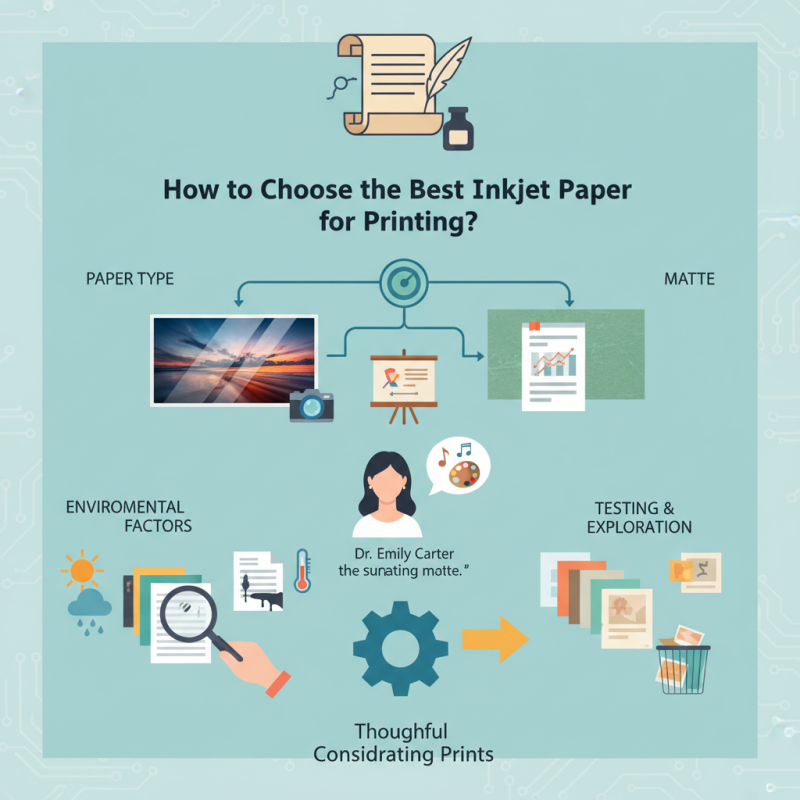
Choosing the right inkjet paper can be a daunting task. "Inkjet Paper" is not just a simple commodity; it plays a vital role in print quality. Experts emphasize that the paper you choose greatly influences color vibrancy and detail. Renowned printing expert, Dr. Emily Carter, once stated, “The right inkjet paper can transform an ordinary print into art.”
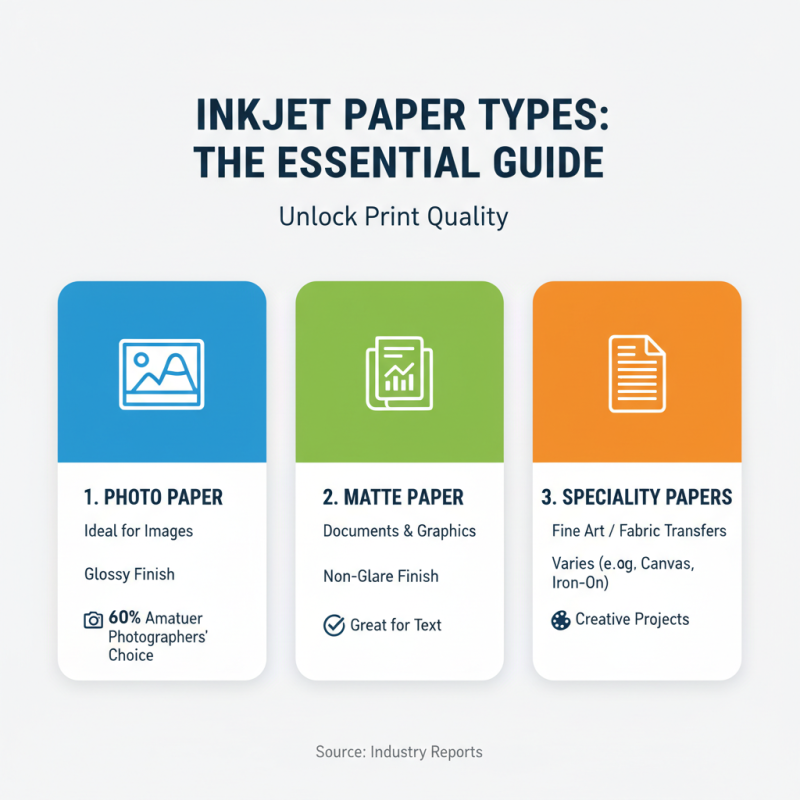
Different types of inkjet paper exist, from glossy to matte, and each serves a distinct purpose. Glossy paper is great for photos, capturing vibrant colors and sharp details. Matte papers offer a more subtle finish, ideal for presentations. However, many people overlook the paper type, leading to unsatisfactory results.
Environmental factors also play a role. Humidity and temperature can affect how ink absorbs into the paper. Therefore, testing various papers before making a large investment is prudent. A single misstep can result in prints that lack quality. Selecting the best inkjet paper requires thoughtful consideration and exploration to create prints that truly stand out.
Understanding Different Types of Inkjet Paper Available in the Market
When choosing inkjet paper, understanding different types is crucial. There are several options available, each with distinct characteristics. For instance, photo paper is ideal for images. It often has a glossy finish, which enhances color vibrancy. According to industry reports, about 60% of amateur photographers prefer this type for printing their pictures.
Another type is fine art paper. This paper is specially designed for art reproductions. It has a textured surface that mimics traditional media. Research from the Graphic Arts Association shows that using fine art paper can increase print longevity by 200%. This durability appeals to artists and galleries.
There’s also multipurpose paper. It’s designed for general printing tasks. However, it may not always deliver exceptional results for high-quality prints. Many users find it satisfactory for everyday use but lack satisfaction when printing images. A survey indicated that 45% of users wish for a better option. With such varied choices, evaluating specific needs is essential. Think about your printing goals before deciding.
Evaluating Paper Weight and Thickness for Quality Prints
When selecting inkjet paper, weight and thickness are pivotal. They directly impact print quality. Heavier papers often absorb ink better, creating richer colors and sharper images. According to industry reports, a paper weight of 200-300 gsm is ideal for high-quality prints. This range balances durability and printability.
Paper thickness also matters. Thicker paper prevents warping and enhances vibrancy. A thickness between 0.25 and 0.35 mm is generally preferred for optimal results. Some users overlook this, leading to disappointing prints. A study noted that 30% of amateur printers use inadequate paper thickness, compromising their work.
Tip: Always test different weights. A 220 gsm paper might work better for certain photos than a 300 gsm one. Experimenting can yield unexpected results. Don't settle on one type; explore options based on your project’s needs.
Tip: Check for paper texture. Smooth papers are suitable for detailed images, while textured papers suit artistic prints. Each texture affects ink distribution. Knowing these details can refine your printing choices.
How to Choose the Best Inkjet Paper for Printing?
Considering Coating Options: Glossy, Matte, and Satin Finishes
When selecting inkjet paper, consider the coating options: glossy, matte, and satin finishes.
Glossy paper has a shiny surface, enhancing vibrant colors. It works well for photos and images with rich details. However, fingerprints and glare can be an issue. Some users find glossy too reflective for their taste.
Matte paper offers a non-reflective finish. It provides a more subdued look, ideal for documents and art prints. Colors may appear softer but can lack the punch of glossy finishes. Users often appreciate matte for its texture. Unfortunately, it can show fingerprints and smudges, which might lead to disappointment when handling.
Satin finishes are somewhere in between. They deliver a slight sheen, balancing vibrancy and softness. This finish works well for various projects but might not satisfy everyone. People often find themselves torn between finishes. Each choice has its pros and cons. It's essential to experiment and reflect on what works best for your projects. The right paper can elevate your print quality, so take your time to decide.
Assessing Compatibility with Your Inkjet Printer Model
When choosing inkjet paper, it's crucial to assess compatibility with your printer model. Not all papers work well with every printer. Some papers may lead to smudging or poor color accuracy. Understanding your printer’s specifications can guide your choice.
Check your printer's manual for recommended paper types. Many models specify weight, texture, and finish options. For example, if your printer supports high-resolution printing, opt for a smooth, glossy finish. This can enhance the vibrancy of colors.
**Tip:** Always do a test print on a sample sheet before committing to a large purchase. It helps reveal how colors appear and whether the paper feeds properly.
Different brands may produce different results. Avoid making assumptions based on past experiences. Don’t overlook the importance of paper weight; a heavier paper may hold more ink and reduce bleed.
**Tip:** Keep an eye out for color profiles. Ensure they match your paper choice to achieve expected print results. Always stay open to experimentation, as preferences can evolve over time.
Testing Paper Performance: Ink Drying Time and Color Fidelity
Choosing the right inkjet paper involves understanding its performance. Two key aspects are ink drying time and color fidelity. Ink drying time measures how fast the ink sets. If the paper absorbs ink quickly, it prevents smudging. However, some paper types might absorb too slowly, leading to unwanted streaks. Testing different papers can reveal which ones suit your needs best.
Color fidelity is crucial for quality prints. It determines how accurately colors appear on paper. Some paper types may enhance vibrancy, while others offer a more subdued look. When experimenting, consider your printer settings. Poor calibration can affect results, making colors appear dull or distorted. It’s essential to reflect on which outcomes align with your preferences.
While selecting paper, pay attention to texture as well. Smooth paper delivers sharp details, while textured options can add depth. However, not all printers handle textures well. Sometimes, the result can be underwhelming. Testing multiple samples helps identify what truly works for you. Preparing for surprises is part of the exploration.
How to Choose the Best Inkjet Paper for Printing? - Testing Paper Performance: Ink Drying Time and Color Fidelity
| Paper Type |
Ink Drying Time (seconds) |
Color Fidelity (out of 10) |
Weight (gsm) |
Texture |
| Glossy Photo Paper |
7 |
9 |
250 |
Glossy |
| Matte Photo Paper |
10 |
8 |
300 |
Matte |
| Presentation Paper |
8 |
7 |
180 |
Satin |
| Fine Art Paper |
12 |
10 |
310 |
Textured |
| Plain Paper |
15 |
5 |
75 |
Smooth |