Exploring China Top Receipt Rolls Types and Their Uses?
In the evolving landscape of retail and service industries, receipt rolls play a crucial role. Various types of receipt rolls are essential for smooth transactions. According to industry expert Sarah Zhang, "The choice of receipt roll can significantly impact customer experience and operational efficiency."
Different receipt rolls serve distinct functions. Thermal receipt rolls are popular, known for their quick printing and cost-effectiveness. However, they require careful handling to prevent fading. Meanwhile, carbonless receipt rolls offer a reliable solution for businesses needing copies. Each type has its strengths and weaknesses.
Understanding these nuances can lead to better choices. However, not all businesses invest the time to consider these options seriously. Many still use outdated rolls, compromising efficiency. This oversight raises questions about operational practices. The right receipt rolls can enhance a business's overall performance and customer satisfaction.
Types of Receipt Rolls Commonly Used in China's Retail Industry
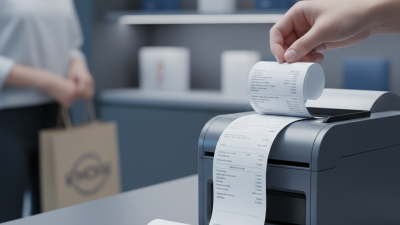
In China's retail industry, various types of receipt rolls are in common use. These rolls come in different sizes and materials, catering to specific needs. Thermal receipt rolls are popular due to their quick printing and no need for ink. They work well in high-volume environments like supermarkets and restaurants, but they can fade over time. Thus, businesses must consider longevity versus cost.
Another common type is multi-layer receipt rolls. Retailers often use these for transactions requiring multiple copies, like returns or warranties. While convenient, these rolls can be more expensive. The different layers might not always align perfectly, leading to messy prints or miscommunication during transactions. This inconsistency can frustrate both staff and customers.
Lastly, there are carbonless receipt rolls, which provide a clean and clear print without the need for carbon paper. These are suitable for businesses that want to maintain a professional image. However, they can sometimes smear if handled too quickly. Retailers need to regularly assess their choices to ensure they meet operational requirements efficiently.
Exploring China Top Receipt Rolls Types and Their Uses
| Type of Receipt Roll |
Width (mm) |
Length (m) |
Paper Type |
Common Uses |
| Thermal Paper Rolls |
57 |
20 |
Thermal |
POS systems, cash registers |
| Bond Paper Rolls |
80 |
30 |
Bond |
Invoices, receipts for formal documentation |
| Carbonless Receipt Rolls |
76 |
25 |
Carbonless |
Duplicate receipts, delivery notes |
| Multi-layer Receipt Rolls |
80 |
30 |
Mixed |
Service industry, retail for multiple copies |
Key Materials Used in Manufacturing Receipt Rolls and Their Impacts
Receipt rolls are essential in various industries, from retail to hospitality. Understanding the key materials used in their manufacturing is crucial. Commonly, thermal paper is favored for its quick printing and high-quality image. The coating on thermal paper reacts to heat, producing clear text and graphics. This property is vital for businesses needing high-efficiency operations.
In addition, some rolls utilize carbonless paper. This material allows copies to be made without the need for carbon sheets. It is often used in invoices and multipage receipts. Despite its benefits, carbonless paper can have durability issues. This can affect long-term record keeping.
**Tips:** When choosing receipt rolls, consider the printing method. Ensure the material is compatible with your printer. Check for certifications that guarantee quality and environmental standards. Remember, not all receipt rolls yield the same results. Balancing cost and quality is important for optimal performance.
Analysis of Thermal vs. Non-Thermal Receipt Rolls in Various Applications
Receipt rolls play a crucial role in various commercial applications, primarily falling into two categories:
thermal and
non-thermal.
Thermal receipt rolls utilize heat-sensitive paper, which changes color when exposed to a thermal printhead.
This type of roll is popular for high-speed environments, such as restaurants and retail.
According to industry reports, thermal rolls account for over 60% of the global receipt paper market, indicating their widespread adoption.
Non-thermal receipt rolls, on the other hand, include impact, dot matrix, and plain paper rolls.
These are often used in environments where durability is critical, such as warehouses or shipping.
While they may not match the speed of thermal rolls, they excel in longevity and quality of print.
A study revealed that non-thermal papers can last up to five years with minimal fading,
making them ideal for archival purposes. However, their cost can be a drawback for some businesses,
as they often come at a higher price point.
When choosing between these types, it’s essential to assess the specific needs of your application.
Thermal rolls may require less maintenance, yet they can pose issues in high-humidity environments.
Conversely, non-thermal options may lead to increased operational costs due to the need for ribbon replacements.
Balancing performance and cost-effectiveness remains a challenge in optimizing receipt roll usage.
Market Trends: The Demand for Eco-Friendly Receipt Roll Alternatives
As businesses increasingly prioritize sustainability, the demand for eco-friendly receipt roll alternatives is on the rise. Recent studies indicate that nearly 57% of consumers prefer brands offering sustainable options. Traditional thermal receipt rolls often contain bisphenol A (BPA), a harmful chemical. In contrast, eco-friendly rolls, which use safer materials, can significantly reduce environmental impact.
Industries are now shifting to papers that are either FSC-certified or made from recycled materials. According to a report by Smithers Pira, the global demand for eco-friendly paper products is expected to increase by 3.4% annually. This growth reflects a broader trend where companies aim to meet consumer expectations for environmentally responsible practices.
**Tip:** When choosing receipt rolls, consider paper sourced from sustainable forests. Look for certifications that demonstrate commitment to eco-friendliness.
As technology advances, new alternatives such as digital receipts become popular. Yet, transitioning fully to digital may overlook certain consumer needs for paper receipts. Not every customer prefers or trusts digital options. This disconnect suggests that a balanced approach is necessary.
**Tip:** Keep customer preferences in mind. Offering both digital and eco-friendly paper receipts may enhance consumer satisfaction. This ensures you're meeting diverse needs while promoting sustainability.
Market Trends of Eco-Friendly Receipt Roll Alternatives
The Role of Technology in Enhancing Receipt Printing Efficiency in China
In recent years, technology has transformed various industries in China, particularly in receipt printing. Traditional methods have been largely replaced by advanced digital solutions. These innovations streamline the process, making it faster and more efficient. With the integration of digital technology, businesses can print receipts on-demand, reducing waste significantly.
New technologies like cloud computing and mobile printing are now common. These allow businesses to connect multiple devices, ensuring every terminal prints a cohesive receipt. However, this reliance on technology raises concerns about data security. Businesses must implement strong protocols to protect sensitive customer information. Balancing efficiency with security is a critical challenge.
The use of automated systems also highlights the need for continuous improvement. Some users still face technical difficulties, which can cause delays. Addressing these issues requires ongoing training and support for staff. As technology evolves, so must the strategies to optimize receipt printing in China.